Saturday, July 08, 2006

Singing out of the flock.

Ok, now this post is going to be a bit (actually a lot!) longer than usual but there's a good reason for this as it was written by a whole bunch of people.
Actually it’s a compilation of selected reactions of more than a dozen (out of hundreds) people to one of the hot topics of these days which is the kidnapping of Israeli tank-gunner Gilad Shalit and the Israeli military operation in Gaza strip in the attempt to free him.

The reactions I gathered were posted on an Arabic forum on the BBC Arabic website. About three dozens of comments were made by Iraqis both inside Iraq and in exile and all these comments were supportive of Israel or at least against Hamas as far as the topic is concerned except for only three comments; that's a 10:1 ratio while as you probably have guesses, the opposite ratio is true about the comments by the rest of Arabs.
These comments and some of the non-Iraqi Arab reactions they stimulated caught my attention.
In fact Mohammed and I spent an entire day reading through the 500+ comments in that thread and thought we could share some of the best and most interesting stuff with you.

What was written in that thread stands as one example of the change in the Iraqi way of thinking since the day we got rid of the dictator and shows that logic and facts are gaining more ground at the expense of emotions and conspiracy theories.

Perhaps our problem is that we in Iraq are evolving politically faster than we are doing when it comes to economy, security, etc. that we are even ahead of countries like Egypt or Kuwait in holding real elections and having a permanent constitution and fair representation of all the segments of the people.
Of course this lag between political and material progress will bring on difficulties and challenges but at the same time what cannot be denied is the impressive evolution in awareness considering the short time elapsed since we got our freedom back.

But what really makes me feel optimistic about this new Iraqi way of thinking is that it shows how Iraqis are beginning to distinguish between terrorism and rightful acts of resistance not only in Iraq but also on a global level and are showing decreasing tolerance for extremism and this in my opinion is what builds peace in the region or any given region of this world.

It is true that terror organizations stepped up their attacks after America and the coalition came to Iraq but at the same time more and more Iraqis are standing against terrorism and extremism and on the long term this is how our world will become a safer place…Enjoy the reading:


"Hamas with their radical false-heroic speech opened the door for extremists in Gaza and Damascus to open a battlefront that will harm the innocent Palestinian citizen and destroy the peace process. Hamas has long been against the peace process and has long worked on halting it"
Ahmed Talib al-Taii: Baghdad/Iraq.

"There are trends that still live by the past and its dark residues of killing ignorance.
We are the sons of today and our minds must develop at a pace close to that of intellectual development of the world. We cannot solve issues with violence, murder and destruction of nations. We have to use logic and dialogue to convince those you disagree with, and once we do that we will have defeated our enemies, at least on the political arena which enables us to win the moral case before other nations.
Reckless policies that believe only in rifles, cannons and slayings belong to the past and will bring nothing but further destruction and chaos.

Strange they speak in the name of Islam while the prophet of Islam was tolerant in dealing with his enemies [whenever he could] for the sake of his message. Those who slay people like sheep are far from the values of that honorable message"
Hashim al-Tabatabai: Baghdad/Iraq.

"Our hearts go out to the family of the Israeli soldier who was kidnapped by some Palestinian group. We share your suffering and we fully support anything you do to free your missing soldier"
Hassan al-Shami: Baghdad/Iraq.


"I wonder how much time and blood it will take until Arabs and Muslims realize that the world is not the property of their ancestors and that God is not a trademark of their minds and that terror is a dead-end that leads only to more destruction.
Israel is a civilized country defending herself from barbaric savages whose minds are made of stone…minds that do not want to believe they are living in the 21st century.
What's happening to the Palestinians despite its cruelty is going to be a good lesson for them to learn they must clear their community off the hateful fundamentalist terror mentality…[Quranic verse] "God will not change people until they change what's within themselves"…but, will you change?!!"
Abu Ayoub al-Iraqi.

"One of the reasons why stand against resisting the coalition forces in Iraq is the failure of Palestinians in their resistance for over half a century.
Because of the "resistance" reconstruction is being delayed and the entire situation in Iraq is deteriorating.
And now because of reckless, useless acts, the people of Palestine are without electricity or other services and will not meet their aspirations.
They [resistance in Palestine] will unjustly take the life of a 19 year old. Not only that, the number of Palestinian deaths and prisoners will increase after this incident and Palestinians will never see rest as long as there's violent resistance"
Shaymaa Abdullah: Baghdad/Iraq.

"To answer Mr. Jihad (the Palestinian from Jordan) and his advice for Iraqis: Iraqis are singing outside the Arab flock for one reason which is that they distinguish the truth from the Arab illusions. Only 13 years ago Iraqis used to speak like the rest of Arabs; equipped with the illusions of the "Zionist conspiracy" created by Islamists and pan-nationalists. But Iraqis now have discovered the bitter truth. Who is murdering Iraqis on daily basis?? Who is prolonging the stay of foreign troops? That's the terrorists coming from Arab and Islamic countries!!
Israel doesn't want to become the "Great Israel" because Israelis are only several millions in this world…
We are people with long history that we are proud of and we possess enough education and awareness, so long live the new Iraq and let Israel live as our neighbor. I'd love to say that I wish Israel could rule the entire region; better than any Arab government except for the Iraqi"
An Iraqi in exile: Asia.

"I just want to say that I stand in admiration and respect for the nation that wouldn't mind destroying the world for the sake of her sons' safety; a nation that doesn't care about the consequences for their operations in Gaza as long as the soldier is still kidnapped and has to be set free.
Let Arabs and Muslims learn how human life is highly valued in all non-Arab, non-Muslim countries"
Hassan al-Shami: Baghdad/Iraq.

"From following the participations I am gaining more faith in the maturity of thinking of my Iraqi brothers.
Thank God.
And to Olmert I say: Go forward and abolish the fountains of terror in Gaza"
A free Iraqi: Baghdad.

"When Sharon got ill we were frankly saddened because he was the cure for terror. But today came Olmert and proved that he's tougher than his predecessor.
I say it frankly that who supports Zarqawi, calls him a martyr of the nation and mourns Uday and Qusay deserves this. And who still feels nostalgic for Saddam also deserves this"
Hussein: Iraq.

"Israel is needlessly prolonging [the duration of this operation].
They ought to invade the entire Gaza strip and add it to its lands for good"
Lewis the Basrawi: UK.


"The problem with the thinking pattern of Arabs is that-unfortunately-it got dominated by the way of thinking of the rulers.
The rulers are essentially the enemies of the people and our intellectuals are suffering from schizophrenia. But did the Arabs and Palestinians learn anything from the Israeli reaction?
Did they learn that the human life is the most precious of all the treasures of nations and that all tools of war and peace are reserved to serve this life? Did they learn that for the sake of one person in danger a whole nation would care and worry? While thousands of lives are taken in the secret prisons in Arab countries without remorse or deterrence!
How many Palestinians lost their lives or homes because of this or that reckless mischief of Hamas?
Is the Palestinian so cheap to be spent for the sake of a record of fake heroism? Shame on the kidnappers who keep their families and money away from the danger while using the poor as human shields"
Hatif al-Iraqi: Baghdad/Iraq.


"It's very stupid to sacrifice an entire people to kill one single soldier from your enemies.
What wrong did the innocent and the children do? You [Hamas] are idiots that you chose confrontation and violence.
My brethren; the scales in our world had changed and the law of "an eye for an eye.." is no longer valid, economy is the real power now….
Stay the course with your principles (if you had any) and you will bring doom upon your people"
Salah: Baghdad.

"To Mr. Mustafa: I don't know what lion den and what Palestinian country are you're talking about. Know that this land does not belong to you but you acquired it by invasion centuries ago and now the land is back to her people. No matter what you do you are not getting Palestine because this land isn't yours but you still want to seize things with force you don't actually possess neither you have the right to do so. You don't even have the brains or the strength, go read history to learn the truth about the land you're fighting for"
Aadil: Iraq.


"The infrastructure is demolished, no electricity, no water, no commerce…all this is the result of the foolishness of the radical Palestinian groups.
You made the Palestinian people lose thousands of folds more than what Israel lost.
The Palestinian radical militants understand no language but that of explosions, suicide and betrayal"
Hassan Kuxi: Kurdistan/Iraq.

"Israel is a fact that the Palestinians-and Arabs in general-should recognize and deal with using the language of our time, not the worn-out rhetoric of Bin Laden which can only lead the Palestinians to the brinks of extinction"
Lewis the Basrawi: UK.


"What Israel is practicing against the leaders of Hamas is a natural act of self-defense.
Hamas wants to export terror to the entire region and even Jordan which hosted 3 million Palestinians won't escape the plot"
Abbas al-Basri: Canada.

"We got used to this empty Tarzanic attitude from the Palestinians, but then they would run and beg for help from America and the international community when the Israelis respond. I'd like to say that Palestinians must realize one thing; that the days of Saddam are gone"
Aadil: Baghdad/Iraq.


And here are a few reactions form other Arabs to what Iraqis said:


"The Iraqis here should fear God. We were never for murdering civilians.
How could you praise Israel when she's killing us with the same American weapons you are being killed with, we were never against the Shia (everybody knows our attitude towards Hizbullah but we are against the [treacherous] collaborators in Iraq.
We shoulder the burden of defending the honor of one and a quarter billion Muslims then comes someone whose country is occupied by the Americans to stab us in the back…!"
Omar: Gaza/Palestine.

"…I don't know what's wrong with some of the posters from Iraq whom I question their Arabism. That Americanized Iraqi says Israel is a civilized country!! And says Israel is defending herself from barbarians!!
Abu Ayoub: As a Muslim woman I ask you; who desecrated your honor in Abu Ghraib and who raped that 15 year old girl?
Your speech will not find ears among anyone with dignity"
Um Ammar: San'aa/Yemen.

"What caught my attention while I'm reading here is the Iraqis' attitude towards the Palestinians (that's if they were really Iraqis). This attitude is harsher than the Israeli tanks. I mean what [harm] have the Palestinians done to the Iraqi people?
Palestine is hardly as big as one district in Baghdad and her population is smaller than that of any Iraqi city!

But we will not kneel down and we shall not despair….we may disagree with Hamas but we will not accept to see America and Israel bring Hamas down and we're proud of our position"
Laith: Ramallah.

"The Israelis will see the consequences of what they did and still are doing when the scales of power change and Arabs and Muslims unite to defend their honor and dignity. Our rights will not be lost as long as we persist to demand them; that's what history taught us and that's what the struggle against colonial Britain and France taught us"
Abdah: Cairo.


"Peace be upon the followers of the right path! As to Iraqis who rejoice what's happening to the Palestinians; I actually have nothing to tell them, never mind what they say.
Palestine has her men who have been defending the honor of a billion Muslims for a hundred years now.
But I ask the sane among Shia Iraqis and Bahrainis not to rejoice our suffering because we are defending your lost dignity"
Abu Khalid: Palestine.

"I think the occupation brainwashed some of our Iraqi brothers that they no longer distinguish between right and wrong or between the oppressor and the oppressed.
We understand your bitterness about your situation and we hurt for you but I call upon you to go back to reason before making judgments and to not listen to the propaganda of Iraq's enemies"
Mourad. [unknown location]


Well, the last guy probably has a point. What he calls occupation allowed us to wash out the stupid illusions and conspiracy theories from our minds.

Thursday, July 06, 2006

A replica of Hamas emerging in Iraq.

Baghdad looks so exhausted these days and so do her people; the relentless violence, the lack of basic services and the scorching heat abolishes human desire to do anything or to even think of anything. In general laziness and wariness is the common feeling in the city.

Even the parliament failed to convene this week because less than 50 MPs showed up. One can also easily notice that traffic on the streets is not as heavy as it used to be and people are getting less interested in talking politics.
Well, the harsh conditions and lack of activity could also be seen from the declining number of updates coming from the Iraqi bloggers in general!

Living for many of us was reduced to existence long time ago; dreams and desires are shrinking under the heavy shadows of the situation.
The government too looks exhausted trying to face all these crises under pressure from a community that is demanding quick solutions and unwilling to listen to the government's excuses.

The heads of the authorities have been busy touring the neighboring countries looking for support, the interesting thing about these visits is that the Sunni delegate (speaker of parliament) was sent to Shia Iran, the Shia PM went to the Sunni gulf countries and the Kurdish foreign minister of Iraq went to talk to the Turks!
I like this distribution of roles, at least this way we can rest assured that the delegates will be negotiating for Iraq not against it!!

Inside Baghdad, statements keep coming about the number of militant groups expressing interest in al-Maliki's reconciliation project and maybe the announcement of the National Dialogue minister Akram al-Hakeem when he said that the number was approaching 20 supports the idea that insurgents still want to make use of this amnesty opportunity. But then the minister adds that "all of these groups but one are of little significance on the ground and the only significant group preferred its name to be kept a secret for the time being…".

On the other hand, the issue of militias remains the tedious riddle facing the government who realizes how difficult it's going to be to deal with these octopus-like multi-headed bodies and there are rumors here that the SCIRI and Sadrists are determined to bring down al-Maliki. The Sadrists in particular are deliberately embarrassing the government in this regard by behaving like government and rebels at the same time and I think I find them pretty close to Hamas who's also lost their way between being government and remaining as "resistance".

In related news, yesterday Sadr announced the shutting down all his offices in Iraq and said this was to protest the government's slow work in rebuilding the golden dome of Samarra, meanwhile there are other news talking about rifts among the ranks of the Sadr militia itself and I suspect inclusion of the names of two "renegades" from the Sadr trend in the most wanted list lately announced by the government supports this news (scroll down to #24 and 27). But the news circulating in Baghdad doesn't speak only of those two but is also focuses around a new rising name in the world of militias; that's Abu Diri'.

Abu Diri' (whose first name is believed to be Salim) is a member of the Mehdi Army and gained the nickname which means 'the armor bearer' after he murdered an MNF soldier and seized his body armor during one the Sadrists battles against the MNF.
Ever since that day he wears the body armor and never puts it away. People say this man commands hundreds (or thousands in some accounts) of "former" Mehdi army soldiers.

The story of Abu Diri' describes him as the killer of Sunnis and suggests that his role is confined to doing a 'Shia body count' after each terror attack on Shia areas and then kidnapping and murdering an equal number of Sunnis. Of course the story has different versions and the ratio varies with the level of enthusiasm of the story teller; an objective teller would set the ratio at 1:1 but a sympathizer would raise it to the level of 10 Sunnis in return for each 1 Shia casualty.

I really do not buy this rift or division story as much as I see we're facing an Iraqi version of Hamas here; one foot in the cabinet and the other in the insurgents' trench and talking about an armed wing working independently from the main body is merely an attempt to make the part who's involved in the government look innocent form the violence committed by their associates.

The militias had sent clear messages to the government that they will not give up easily and probably the latest kidnappings that reached top officials in the government reiterate these messages, it's like telling al-Maliki "No matter what you do we're going to do anything we like, anytime we like and anywhere we like against any target we choose".

The situation isn't nice at all and al-Maliki's cabinet is going to face a very rough summer.

Tuesday, July 04, 2006

Samarra puts a reward on the head of the golden dome attack's mastermind.

Al-Sabah has the report:

The people of Samarra offer a 100 million dinar reward to anyone who provides information that lead to the death or arrest of Haitham al-Badri. Sheikh Khalid al-Baz, one of the prominent sheikhs of Samarra told al-Sabah that al-Badri was notorious for his violent behavior and had committed several armed robberies and carjackings.

Al-Baz added that al-Badri joined al-Qaeda after US troops killed his brother to later become an "Emir" of this terrorist organization in the Salahiddin province and started murdering anyone who opposed his Takfiri ideology; that's why he and his gang murdered sheikh Hikmat al-Baz of the influential al-Bo Baz tribe. The men of the tribe then decided to fight this Takfiri group and with the help of the 1920 revolution brigades they killed more than 50 terrorists and forced others to flee.

"Now that the people of Samarra know that it was al-Badri who blew up the Dome of their ancestors they are trying to hunt him down and they distributed photos of al-Badri's in the markets" said al-Baz and added that 1000 of the sons of Samarra are chasing down al-Badri and whoever helped him carryout his coward doings.


The 100 million dinars (~ $ 68 000) is not a lot of money compared to the multi-million rewards offered by governments for similar hunts but when it comes from a single tribe (or even a bunch of them) it reflects the seriousness of these people in what they're saying and doing.

Sunday, July 02, 2006

Aadhamiya...again.

I'm afraid what we predicted yesterday is beginning to happen…

The mostly Sunni populated Aadhamiya district in eastern Baghdad came under heavy mortar fire this afternoon. The bombardment lasted for about 30 minutes and I could count more than a dozen explosions. No one claimed responsibility for the attacks but the residents of Aadhamiya and surrounding neighborhoods think it was most likely the Sadr militias.
Soon after the attack with mortars gunmen took to the streets with their weapons and clashed with security forces while US Apache helicopters were seen flying at low altitudes.

I talked over the phone to friend who lives in Aadhamiya and he told me that he tried to flee the area with his family to escape the clashes but to find that all main streets were closed to traffic. He confirmed that at least one mortar round struck the Shrine and mosque of Abu Hanifa.
I couldn't find any new reports on the incident except for a brief mention down this story on the BBC and whether the clashes and mortar attacks caused casualties is not known as of now.

I still can hear intermittent gunfire from small and medium machineguns with sporadic explosions of RPGs.
The atmosphere was tense around Aadhamiya as curfew time was approaching and people are afraid that violence might spread to adjacent districts.

And with the Accord Front suspending their participation in the parliament, I think the tension will be increasing over the next few days.

Saturday, July 01, 2006

Bombing the reconciliation.

The eyes in Iraq are focused on al-Maliki's reconciliation plan and discussions on whether it's going to meet success are all over the place especially in the Iraqi media.

Today the headlines on most Iraqi newspapers are talking about al-Maliki's tour in the gulf that is supposed to cover at least three countries with Saudi Arabia being the first stop.
The announced objective of the tour is to garner regional support for al-Maliki's reconciliation initiative and probably al-Maliki decided to make this tour after some insurgent groups have called for giving the Arab league and certain Arab countries a role in this project, meanwhile there are other groups alluding to a possible American pressure on these countries to play a constructive role referring to Khaliazad's earlier visit to Saudi Arabia.

Actually I would be disappointed if al-Maliki hadn't consider such a tour; the neighboring countries are all involved in what's going in Iraq in one way or another and no one can deny that they are part of the problem therefore any search for a solution has to include talking to these countries and working out some sort of understanding with them.

We must not forget that the conflict in Iraq is in fact an indirect conflict between the neighboring countries and America and among the neighboring countries themselves (a sectarian-ethnic conflict between the Arabs and Iran, a political conflict between Iran and America and another political conflict between Arabs and America and this one originates form the difference in the visions of America and Arabs for the region. Not to mention other smaller conflicts). Unfortunately the only Iraqi elements in these conflicts are the Iraqi parties that accepted to fight this conflict on behalf of Iraq's neighbors.

Let's go back to Baghdad, here we are getting contradicting accounts on the progress of the plan, some like the pro-government al-Sabah are overly optimistic about it and are conveying positive messages supposedly from the insurgent groups that are accepting the plan. Al-Sabah is even reporting that yet more insurgent groups are joining the club:

Informed sources told al-Sabah that a new number of these groups are asking some parliamentary powers to mediate talks with the government…the sources said this desire was conveyed to the PM through people close to his office and that al-Maliki is expected to give his response to these groups' demands by Friday. The same sources said these groups are considering making a joint announcement in which they will declare dropping their weapons and joining the talks with the government within 15 days; this time the sources are talking about the "largest of the militant groups" that make up the bulk of the resistant groups.


On the other extreme there is the anti-reconciliation camp of which the association of Muslim scholars whose spokesman al-Dhari keeps saying that "no resistance groups had accepted al-Maliki's initiative" and even said the names presented by the media as names of militant groups did not exist…[I wonder if he has a list with all the names!]

In the middle of these conflicting accounts we get some moderate statements like the statement from deputy PM Salam al-Zoubai; al-Zoubaii who's one of the leaders of the Accord Front was supportive of the initiative but said that only 5 not 10 militant groups had responded positively.
He also said something interesting about the militias issue as he told al-Sabah that the cabinet is trying to find a solution for this issue without integrating the members of these militias into the official security forces.

Another report, this time from al-Mada gives an impression that al-Maliki wants to open as many dialogue channels as possible to encourage insurgents to come forward and talk to him even if no mediators were found. The paper says that al-Maliki announced a special email address to allow anyone-especially insurgent willing to reconcile-to allow them to contact him directly over a safe line. But the also notes that response has been scarce so far and only two messages arrived at that inbox as of Thursday according to top security adviser Wafeeq al-Samarraii.
By the way, I couldn't get that email address, it was displayed only once on local TV and only for a few seconds "to avoid spam mail"!!

This reconciliation plan continues to face serious challenges and the worst of which is today's barbaric attack that killed and wounded dozens in Baghdad, in "Sadr city" to be more accurate.
I'm afraid this attack will inflict more harm in the future than it already did today because it's similar to the Samarra bombing in its goals and this one I see as a blow directed at the reconciliation plan because the type of target suggests so.
The attack carries the marks of al-Qaeda and this terror organization is learning to choose their targets carefully; they did see for example that assassinating relatives and colleagues of the members of the Accord Front did not deter them from joining the political process and becoming part of the cabinet because they were determined to do so. So this time in order to avoid similar results they did not target the parties that are willing to reconcile and chose the side that openly declared its rejection for the reconciliation plan and is well known for being a violent trend.

I think al-Qaeda is hoping that this attack will provoke followers of al-Sadr whose response will almost certainly be a violent one and will probably lead to a series of exchanged violence that will threaten the reconciliation initiative in its first steps.

Wednesday, June 28, 2006

No amnesty for killers, period!

Finally, Prime Minister Maliki puts an end to the confusion and ambiguity that was associated with his reconciliation plan.
He said it clearly that amnesty will not be offered to killers of coalition soldiers:

The amnesty doesn't include those who have killed Iraqis or even coalition forces because those soldiers came to Iraq under international agreements to help Iraq


I feel better about Maliki's plan now; mostly because with this point clarified, the government will avoid falling in the serious contradiction we warned from.

But this raises an interesting question; if amnesty is not going to be offered to killers of MNF soldiers, Iraqi soldiers or Iraqi civilians then to whom?

With trigger-pullers excluded, maybe amnesty will be given to the facilitators and sympathizers; those who provided safe houses, transportation and facilities to the insurgents. If this is the case and if those facilitators accept the offer I think it will significantly reduce the ability of insurgents to carryout their operations and the effect will be more profound on foreign terrorists who depend largely on local facilitators.

Update:

Three more insurgent groups have decided to join Maliki's reconciliation project, according to al-Sabah:

Al-Sabah's sources revealed that the three groups that announced their supports for Maliki's initiative were Ammoriya Forces, Jaish al-Mujahideen and the Brigades of Saladin. This brings to ten the number of militant groups that responded positively to the initiative, our sources expressed hopes that more groups will join in in the coming days.

Vice president Dr. Tariq al-Hashimi told al-Sabah that he proposed to organize a meeting for tribal powers to empower the good relationships among the sons of the one nation and to smother the fires of sectarian rift.
Sheikh AbdulSalam al-Dulaimi said that more than 30 sheikhs who are prominent tribal leaders in al-Anbar region are about to announce an 'honor pledge' that forbids bloodletting.


So far things seem to be progressing smoothly, but nice words and promises mean very little until they translate into real work; which is my hope.

Breaking News…Samarra bombers arrested!!

In a news conference currently being broadcast on TV, Iraq's national security advisor Muwaffak al-Rubaie says Iraqi security forces arrested Abu Qudama al-Tunisi in a raid in the suburb of al-Dhuloiya north of Baghdad.
15 other foreign terrorists were killed in the raid according to al-Rubaie.

The terrorist of Tunisian origin confessed that he was responsible for the attack that destroyed the Askari Shrine in Samarra back in February 22 of this year.
Muwaffak al-Rubaie said the security forces are still searching for Haitham al-Badri who is believed to be the field commander under whom Abu Qudama was operating.


More...

Al-Rubaie described Al-Badri is a terrorist with connections to elements in the past regime who later became one of the leaders of Ansar al-Sunna and later al-Qaeda organization in Iraq.

Al-Rubaie adds that this terror cell was responsible for the assassination of the late al-Arabiya reporter Atwar Bahjat.

Al-Rubaie described ho the bombing was organized and says details were taken from the confessions of the captured Abu Qudama:

4 Saudis, two Iraqis and one Tunisian entered the mosque at night, handcuffed and locked up the guards in a room and spent the night planting the bombs all around the mosque. Next day they kidnapped and murdered Atwar Bahjat while she was trying to cover the news of the bombing.


Al-Rubaie displayed a poster showing the Shrine before and after the bombing along with a photo of Haitham al-Badri and urged the people to cooperate with authorities in locating the runaway terrorist.

Monday, June 26, 2006

Seven militant groups accpet al-Maliki's offer.

From al-Sabah:

Seven militant groups announced their desire to join the political process in accordance with the reconciliation project and said they were ready to enter a truce and stop the violence.

MP Hassan al-Sinaid-whose close to PM Maliki-said third parties conveyed the message of the seven groups confirming that they were not involved in Iraqi bloodshed suggesting they're eligible to benefit from the initiative.

Al-Sinaid said it was possible that Maliki would meet representatives of these seven groups either directly or indirectly, because he's concerned about the success of the initiative and is keen to gather support for it. Al-Sinaid adds "al-Maliki believes in political measures now, and not only in military ones".

According to those third parties, the militant groups consider the initiative tempting which encouraged them to respond positively, and at the same time pointed out that it's possible to win other groups into the project as they will not find a good reason to say no.
Initial information indicates that the seven groups are: the brigades of the 1920 revolution, the army of Mohammed, Heroes of Iraq, the 4/9 organization, Al-Fatih brigades and finally the general command of armed forces.

The demands of these groups can be summarized by: putting a timetable for withdrawing foreign troops, recognizing the acts of resistance as a legitimate right [still a controversial point with no clear definition or guidelines stated as of now], reviewing the deba'athification law, preserving the unity of Iraq, preventing foreign infiltration, releasing innocent detainees, providing jobs, respecting the citizens and compensating the affected and finally disbanding the militias.


This announcement seems to have been preceded by a lot of work but a declaration of amnesty was the militants' condition to join the reconciliation project mostly to save face.

So far, everybody in Iraq feels good about Maliki's plan and expressed their hopes for it to meet success and ease the suffering of the Iraqi people; everybody except for the Sadrists and the association of Muslim scholars who both criticized the plan and said it wasn't acceptable and expected it to fail.
The question is do they are expecting it to fail only because they think it is not framed in a workable way or because they wish for it to fail?
I'm afraid the latter is the likely answer.
Oh, and did I forget to mention the BBC?

Sunday, June 25, 2006

Who should recognize whom?

Prime Minister Maliki presented his reconciliation plan to the parliament today and in spite of some objections from some parties the heads of parliamentary blocs declared their support for this plan soon after the session of the parliament ended and requesting some further detailed descriptions and modifications in some cases to match their blocs' understanding of the reconciliation concept.

It seems like this plan represents a real will for reaching a form of understanding among the different rivals in this country to make the country move forward and build the country without having to resort to violence through adopting dialog and talk instead of violence and alienation.

However, this honest will is not be enough to make this project succeed unless it's combined with a workable formula and here I think insisting on classifying armed groups and declaring some of them as "honorable resistance" and legitimizing their acts while they are yet to recognize the new political system and drop their weapons is totally wrong.

These armed groups of all backgrounds must be classified under one category which is militias and these under the reconciliation plan are recognized as a main obstacle hindering the building of a modern state of law. Thus separating the so called resistance from the militias and treating them as different categories will be the beginning of a failed project.
I am not talking out of a personal conviction but I'm talking out of the fact that makes any description other than "harmful militias" a big mistake and should the government fall in this mistake to appease this or that faction, the government will be facing a terrible contradiction…let me put it this way, first you hear this:

-The elected Iraqi government officially asks the UN security council to extend the mission of the multinational forces in Iraq for another year.

Then this:

-The elected Iraqi government offers legitimacy to armed groups fighting the multinational forces.

Doesn’t that sound absurd?

We have to choose one of two ways; either to consider each and every one of these armed groups an outlaw militia and deal with them accordingly by dismantling and disarming them and then prosecuting those involved in crimes against Iraqis or against the multinational forces.

Or,

To consider the government's plea for keeping the multinational forces an illegitimate decision that does not reflect the people's will. Then we should take the case to the parliament and tell them to vote.
And if the parliament decides these forces should leave immediately instead of staying an extra year then so be it! Let the forces go pack and let's legitimize resisting them and then we can go face our destiny alone.

But this will not happen because we saw the government pass this step without any considerable objection from the parliament and even those who raised objections did not request a vote; they object just to embarrass another bloc and because they know well what the result for such a vote would be.

Offering legitimacy to any entity that bears arms outside the official security forces is the beginning of the wrong solution. The interests of Iraq and the decisions of the elected government and logic put us before one valid choice…

No legitimacy for outlaw militants, period.

Who carries arms outside the official circle is an outlaw and should not be negotiated with before he drops his weapon and must first recognize the government that represents 11 million voters before he can ask for recognition from the government.

Thursday, June 22, 2006

Forward Together update; Maliki sends a powerful message to the militias.

It is day eight of operation forward together now, the operation so far has met some relative success according to an official statement from the ministry of defense:

Baghdad has witnessed a decrease in number of attacks; terror attacks in the past week-first week of operation forward together-were 19% less than attacks in the week before the operation was launched.

But the operation has also faced some serious security breaches like the suicide bombing in the Buratha mosque or the latest mass abduction of laborers just outside of Baghdad.
From day four we said that adjustments had to be made, today the authorities are discussing and preparing for these adjustments, and the reports are quite encouraging!

Yesterday Prime Minister al-Maliki told the commanders in charge of the ongoing security operation to give explanations for the disturbing security breaches that happened over the past week. He asked the commanders to identify the troublemaking entities "whoever they may be" and to deal firmly with them.

The answer came from the chief of operations in the defense ministry general AbdulAziz Mohammed who sent a message to the PM telling him that the presence of armed partisan militias was the major obstacle complicating the execution of the operation.

Al-Maliki's response to this info was quick, today the front page story on al-Sabah reports that al-Maliki promised to take decisive steps to overcome these obstacles and insisted that his government was determined to make this operation succeed.

Developments kept coming fast and soon after that general Mohammed told the local press that an important meeting is going to take place today [Thursday] between the Iraqi and American commanders to discuss plans to deal with the obstacles facing the operation that were identified as the presence of militias.

Brigadier AbdulJalil Khalaf, commander of the 1st brigade/6th IA division which is responsible for security in wide areas of Baghdad told al-Sabah that orders were given to the Iraqi soldiers to open fire on anyone seen carrying a weapon and does not belong to the official security forces "all weapons outside the official security forces or the MNF are enemy weapons and must be dealt with accordingly".

Wednesday, June 21, 2006

Rumor of the day.

All societies have their own flow of rumors but in places like Iraq, we just LOVE rumors. Rumors can be fun, rumors can bring hope and sometimes rumors make you get prepared to face the incoming unknown.

So here's the latest of the rumors circulating in Iraq, particularly in the Shia community as I heard it yesterday when I met a friend from the south; a young journalist who I consider a reliable source for all kinds of unreliable news. The new rumor he brought with him this time is built over an existing background of conflicts within the UIA. It goes like this:

Two weeks ago the forces of the interior ministry arrested a group of militants that are believed responsible for a number of crimes. Those terror suspects turned out to be members of the Badr organization whose leader is Abdul Aziz al-Hakeem.
Al-Hakeem paid PM Maliki a visit and asked him to order the release of the detained Badr members, a request that upset Maliki and to which he responded by telling al-Hakeem "I am trying to build a state here and you come to ruin it?!! There's no way I'm doing what you are asking me to do".
The two men exchanged very harsh words and al-Hakeem was so angry when he rushed out of al-Maliki's office.

The creator of this rumor went as far as connecting the above story with al-Hakeem's sudden trip to Iran and Bush's visit to Baghdad, here's what my friend added:

People in the south are saying that al-Hakeem flew immediately to Iran to discuss Maliki's defiant position with the Mullahs and as a reaction Bush came all the way from America to tell Maliki that he has America standing on his side.


This rumor may sound so naive, especially in the last part of it but no smoke is without fire as we say here. The story was inspired by the fact that the UIA is divided over a number of issues and that Dawa and SCIRI were not getting along well for quite a long time; this was particularly visible during the months that followed the December election and the dispute over choosing a prime minister.
The dispute resurfaced again last week and this time in a more personal way between al-Hakeem and al-Maliki, this was when a draft of al-Maliki's reconciliation plan was leaked to the local press. This leaked draft included a point about bringing back former high-ranking Sunni officers and giving them high positions in the army and this particular point in addition to a division over the description of "resistance" led to intense disagreement inside the UIA and especially from al-Hakeem according to local news reports.

Apparently this rumor was created and spread by some of al-Maliki's supporters who wanted to paint a better image of their boss but even if it was entirely made up it will still indicate an inclination in the PM's close circle to do what's needed to prove that the new head of government is competent and does not allow his sectarian emotions to stop him from doing his job.
Anyway, this rumor left a positive impression among the people who heard it, at least that's what I could sense from the enthusiastic tone of my friend.

Tuesday, June 20, 2006

Sir, would you please fill out this form?

Now and after a week since operation forward together was launched in Baghdad let's try to evaluate this operation through the people's reactions and through the authorities' announcements.

First we will see that the operation brought high hopes and was found largely promising by the people of Baghdad as it reflected the level of the government's determination to provide Baghdadis with their number one need, which is security.

What happened in the first two days made people feel that there was a good chance for the government bring calm to the capital but two days later the insurgents we again able to find a way to disrupt peace and renew their attacks against Iraqi civilians and ISF.

Yesterday the Iraqi minister of national security admitted that insurgents are a step ahead of the government when it comes to intelligence. As bleak as this confession may sound I think it's admirable of the government to admit such a fact because the first step in solving a problem is through recognizing it and never through denying it or speaking big empty words.

In fact the minister's statement was pretty close to what we wrote in our earlier post, both accounts define the weakness point of this particular operation and that of the government's efforts to fight the insurgency in general which is intelligence.

To discuss this point we should go back few years in time to know the intelligence system worked in Iraq and why we still be behind the insurgents in this regard if we did not take the right measures.

As we all know, the bulk of the insurgency is made up mostly of the security corps of the past regime, mainly the secret service, special republican guards, military intelligence and former ba'athists and these corps collectively were the ones in charge of collecting and analyzing intelligence for the regime and over years, these corps were able to build a massive database that contained lots of information about every single citizen in Iraq.

I recall those years when everyone had to fill countless inquiries (general information forms) every now and then; for example if I moved from one city to another, applied for a job, moved from one school to another, rented a house or a shop, started a new business or even signed up for a phone line I would be asked to fill many of these forms to many entities. Not to mention the inquiries every citizen had to routinely fill and these inquiries would come from the police station, local ba'ath HQ, the district council and every other authority you can think of.

these inquiries in addition to asking regular questions like number of family members, their jobs, working places etc, etc, they also went as far as asking detailed questions about relatives as far as of the 6th degree, like "do you have any relatives that had been executed?" or "do you have any relatives living abroad? And why?".

The data collected in this manner were used to keep track of citizens and determine how this or that one should be treated (given or denied a job, admitted to college or not, promoted or not).

You can imagine now how much information the past regime had about the people of Iraq, and where did that huge database go?
It was kept by the same people who were in charge of it before, hard disks and box files were all taken home and the rest was burned and soon many of those personnel became the core of the local insurgency so it's somewhat correct to say that those intelligence collectors did not lose power because they retained one of the most powerful weapons in the kind of warfare we're fighting here.

The regime was toppled and places were switched; the jobless former officers became in control of a huge information treasure while the new administration was left with office drawers void of files!

So this imbalanced possession of information needs to change, and to change soon and a plan to build a new database should go simultaneously with the plan to collect weapons. We need to do this because the insurgents are hiding amongst us, they look and dress like normal civilians, they drive civilian vehicles, not tanks and they operate from normal houses, not military bases.
Building a new database can be done through reasonably simple procedures and from the base up by a simple campaign coordinated the authorities, the district councils (Mukhtars) and food ration distribution points.

Of course this should not be done in the same totalitarian demeaning manner that Saddam adopted; just decently detailed records of who lives where and who works where will be enough and can be of great help to our counterterrorism efforts.

Saturday, June 17, 2006

Forward Together faces a serious challenge.

The first time I checked on Iraq's news this morning I read about several violent incidents in Baghdad that included roadside bombs and car-bombs that left dozens of civilians and ISF members dead or injured. I even did pass by close to the scene of at least two of these attacks after which many of the main roads in Baghdad were closed to traffic.

Just an hour ago I heard of another series of bombings, also in Baghdad and the news reports are talking about 5 new car-bombs that went off mostly at police and army checkpoints a short while before curfew time was there.

I was afraid that this would happen but I was also hoping it would not…unfortunately yet not surprisingly it did.
I think the problem with the new security operation is that the tactics employed so far are not new and were not adjusted in a way to meet the needs of the changing security challenges and its worst weakness is that it focused on fixed checkpoints.

My guess is that the terrorists/insurgents were frightened by the size of the operation and the amount of troops deployed but they were able to check the pulse of the new security measures and adjust accordingly, thus was the period of relative calm we had in Baghdad during the first two or three days between Wednesday and Friday.

The terrorists apparently were able to study the geographic distribution of checkpoints and a)find safe routes to move around and carry out their attacks without passing through checkpoints, and b)make the checkpoints themselves targets for their attacks.

I will not say Forward Together has failed as it's still early to make judgments but we will be waiting for the next phases of the operation which is the announced plans to disarm the city and attack the terrorists in their safe homes because that is the way to reduce violence.
Having checkpoints is a good idea, but these checkpoints should have no fixed places or schedules. On the other hand fixed checkpoints can be very helpful at the entrances and exits of Baghdad and these should be fortified enough to sustain themselves and repel possible attacks.

Needless to say, collecting intelligence is of critical importance to the success of the operation; no checkpoint can stop a suicide bomber from inflicting harm once he's on the street. Those must be dealt with before they wear their explosive belts or leave the garage with their explosive-laden cars, and this requires intelligence and a more aggressive tactic than fixed checkpoints.


What happened today urges an adjustment of tactics on the part of the commanders in the interior and defense ministries, and this adjustment must be made as soon as possible.

Thursday, June 15, 2006

Forward Together...Day 2

Baghdad sounded quieter than usual today, and the sounds of bombs retracted before the tide of official announcements that took the news headlines replacing the usual bloody scenes.

Traffic in the capital was rather usual for a Thursday, the last weekday in the week. I woke up this morning to the sound of a small explosion, probably a PRG that was followed by some shooting which is usually the response of security forces present in the area to such attacks. That was during the curfew hours in the early morning and when I went out later in the morning there was no evidence that the attack left casualties or material loss and we even didn't hear about it in the news.

For the second day checkpoints are more abundant than usual and are more serious in their work; this is visible from the number of vehicles that get picked for searching. On normal days we would see soldiers manning the checkpoints do nothing more than scanning the passing vehicles with their eyes, sometimes holding a paper with a list of wanted registration plates and in most cases only dark-colored BMWs, Opels and Daewoos would be stopped and searched but now every vehicle is susceptible for a search.

We heard nothing about what was accomplished yesterday but we sense a clear atmosphere of cautious calm.

Tomorrow a ban on vehicles will be imposed from 11 am to 3 pm, apparently aimed at the Friday prayer time and the few hours prior to and after it.
I guess this curfew will be there for more than one Friday and the point behind that is probably to limit worshippers in mosques to the immediate circle around the mosque. In most cases worshippers are from that circle and they need no vehicles to get there but the case is different with large mosques that usually serve as substitute offices for certain political parties and trends and such mosques are frequented by lots of worshippers from distant places and always pose a possible starting point for organized protests or even violent action taking advantage from the divinity of mosques and the Friday ceremony as well as the long reach of certain large mosques that goes far beyond the spot of the mosque.
Naturally who takes the time to travel miles to get to a certain mosque is viewed as an active element seeking something beyond prayer alone, so this limitation will prevent such potentially undesirable activities from happening.

Back to the important announcements I mentioned above…

The Iraqi media was especially interested in PM Maliki's expected plan for reconciliation, talking about such a plan includes two sides closely related to the ongoing security operation, the first is a message telling that restoring security is not essentially through the use of force and that reconciliation is an important factor in building security and replacing bullets with talks. The second aspect falls in the category of shaking the lines of militants taking advantage from the hesitation of some groups following the successful strikes of the last several days.
In general and as a result of the Sunni participation in the government, these hesitant elements will have a good chance to leave weapons behind and join the political train by accepting the reconciliation invitation that pretty much resembles a pardon preceding a military crack down to deny the use of lack of such gesture as a pretext to continue the violent course by some militant groups.

The other announcement that received equally high coverage was that of the government's security adviser Mowafak al-Rubaie. While Maliki adopted the language of pardon, Rubaie adopted the language of confident force in addressing the extremists who cannot be negotiated with.

I agree that the raid that killed Zarqawi led us to some significant findings and revealed a lot of information but it didn't reveal everything, so I agree with Mr. Rubaie that the end of Zarqawi marked the beginning of al-Qaeda's end in Iraq and I do believe the government has a golden opportunity to deal with al-Qeada and its allies as the death of Zarqawi left his organization and followers in a state of shock and huge suspicion that the network's lines have been infiltrated, and I feel that most of them are behaving clumsily out of fear from being already identified and located. Of course this will make their moves more noticeable and will eventually expose them, that's if they're not already exposed.
Moreover, the government is sending vague messages through the local media stating that some of the documents seized near Zarqawi included names of well known political figures and I think this kind of leaked information is choking the involved elements.

In fact some people here are suggesting a link between the arrest of the head of the city council in Kerbala and the information found in those documents building these speculations on the nature and timing of the arrest, some are expecting similar arrest to follow against even more important figures.
That's what we're going to find out soon but in general these announcement and leaks stand as part of a necessary psychological war that-if performed well-can further lower the morale of the terrorists and their allies.

One of the most significant things about this operation is that we did not see any serious rejection or opposition to it from any of the influential parties or clerics which indicates that there's a general desire to back this operation or at least let it pass without complications and accept it as a means to get out of the deteriorated security situation.
Maybe that's because this particular operation doesn't give an impression that it's directed against a certain segment or sect as the case would be if the operation was conducted in Najaf, Sadr city or Ramadi for example.

The current feeling in Baghdad is that the operation is in the benefit of everyone and this is a good advantage that should be used to achieve success.

Wednesday, June 14, 2006

Forward Together!

Baghdad looked tense today as the city witnessed the launch of the new massive security operation "Forward Together".
The feeling here ranges from anxiety to hope which I saw clear in the voice and looks of the people I met; in addition to the understandable anxiety that accompanies every new military operation I saw a lot about hope that this new operation may be able to stop or even reverse the deterioration of security in the capital.

Well maybe this is our best chance to achieve some progress security-wise and there's a growing feeling (I won't say dominant but it's here and it's visible) that the new government has the real and serious desire to end this tragic chapter of Baghdad's history.

It seems that President Bush's visit to Baghdad has given more credibility for the operation; that at least was what I heard from people around me or read in Baghdad's papers today; the visit definitely left a positive impression that America is dead serious this time about finding solutions for Iraq especially when it comes to security and critical parts of reconstruction like electricity.

No one can predict how much time this new operation will take but time in this case is of little importance compared to accomplishing the objectives of the operation.

The streets weren't so much different this morning except for increased security presence in the form of checkpoints and traffic jams that were associated with a few incidents and this is what I experienced this morning on my way to work, most likely that was because I live in one of the hot spots that was among those listed as targets for the operation.
I heard a number of explosions that weren't so far away with sporadic light and medium gunfire but news reports indicate that only one incident left casualties.

Some Baghdadis have shopped for extra amounts of water, food and fuel expecting the operation and curfews to take more than a few days and there's a minor internal immigration within Baghdad from the more dangerous districts to the relatively safer ones. This isn't happening in large numbers and I knew about it only from some families that I know that have temporarily left their homes in some districts.

In Baghdad you can't find the same feeling you would find in Ramadi, that is the fear that the operation will include collective punishment and this is because Baghdadis are used to living standards of a big city (in Middle Eastern standards though) but in the past few years they have suffered enough from militants of all types and want their city life back, they want to see militias and insurgents defanged and they want schools and markets and services to function properly again.

In order to encourage the residents of Baghdad to report abuse by the ISF or send tips to the authorities, the government announced phone numbers and email addresses to facilitate contact. The government knows that large segments of the people (mostly Sunni) do not trust these lines and think they could be used to track them back through corrupt elements within the security forces, so the government is trying to deal with this mistrust and they announced numbers that people can use to directly contact the office of deputy PM Dr. Salam al-Zouba'i (who's originally from the Accord Front) apparently to persuade the Sunni residents of Baghdad to feel safe about contacting the authorities.

I don't want to bet on the citizens' cooperation in this regard but at the same time I can say that they won't give the militants a hand. The militants are getting more and more isolated by the day and this isolation is directly related to the increasing suffering and contempt of the citizens from this useless armed opposition especially that most of the once were opposition parties have joined the political process and became an integral part of the government and they smothered their tone and making their demands through political routes.

The militants know the strategic value of Baghdad so they will probably try hard to keep a low profile during the operation in order to stay in Baghdad and I don't expect them to risk an open confrontation with the authority and they will not be dragged to such confrontation; they depend almost entirely on hit and run attacks using the advantage of looking like civilians until the moment they strike.
So for this operation to work out, we will need to focus on disarmament and collecting every piece of weapons that can be collected because each weapon represents a chance for more violence.
In fact I believe this will be the main objective of this operation; to maintain strong security presence, make it harder for the militants to move around and do as much disarmament as possible.
The media here is reporting that the plans include collecting all unnecessary weapons from homes; that's if a family possesses two weapons fro example they will be allowed to keep only one small weapon with a limited amount of ammunition even if both weapons were licensed.

There are also rumors that the campaign will include questioning those who have recently moved from other provinces and settled in Baghdad or those who relocated themselves within Baghdad to verify the reasons behind that movement.

We'll try to keep you updated on this once we have more to say, but that's all for now.

Monday, June 12, 2006

Iraq, Jordan send powerful messages to Zarqawi's lovers.

The anti-Zarqawi-lovers sentiment is getting stronger in the region, especially in Iraq and Jordan where Zarqawi and his gangs committed their worst crimes.

Al-Sharq al-Awsat reports that authorities in Jordan have issued arrest warrants against four MPs from the Islamic movement; two of whom (Mohammed Abu Faris and Jafar al-Hourani) are already in custody while the search continues for Ali Abu al-Sukkar and Ibrahim al-Meshokhi.

Al-Arabiya TV mentioned today that arrests were made after families of victims of the Amman hotel bombings raised the case to the authorities after the four parliamentarians attended a mourning ceremony at Zarqawi's family home.
One of the four Islamists appeared on TV and called Zarqawi a martyr while denying that title to the victims of the Amman suicide bombings which obviously enraged the families that protested the outrageous attitude in front of the building of the Jordanian parliament.

Meanwhile in Baghdad, Al-Mada reports:
The Iraqi foreign ministry summoned the Palestinian consul Mr. Daleel al-Qassos last morning to express Iraq's shock and disappointment by Hamas's defense of Zarqawi and calling him a martyr while the entire world knows the crimes this terrorist committed against Iraqis and other peoples in the region including the Palestinians who had fallen in the Amman bombings.


The paper adds quoting the Iraqi deputy foreign minister Labeed Abbadi as saying:
Iraq was expecting a clear stand from our Arab brothers; that they would congratulate the Iraqi people and their security forces on this great accomplishment in our war on terror but we were surprised by their silence and by the attitude shown by Hamas which can only be interpreted as frank support for the murderers of Iraqis.


The report adds that the foreign ministry wants an apology from Hamas:
The Iraqi government demands that the Palestinian government headed by Hamas gives a clarification regarding their earlier statement, if they fail to do so, the Iraqi government will thoroughly discuss a suitable reaction to the attitude of the Palestinian authority.

The quick reaction of the Jordanian government is definitely appreciated and the most significant point here is that the first move came from the people who have finally risen to put a limit to the death-preachers who-without any regard for people's feeling and sufferings-defied and all values of humanity and logic let alone a legitimate judicial decree by openly praising and glorifying a murderer who created rivers of blood anywhere he went.

Those who preach hatred and death represent one of the roots of the terrorist culture and the struggle against terror cannot succeed without bringing justice upon those evil men.

I wonder what will it take to see a strong public and official stand against terrorism and death-preaching in the rest of the Middle East and when are we going to see the people in Saudi Arabia or Egypt for example raise cases against Qaradawi and his likes?

Sunday, June 11, 2006

Some are sad just because we're happy.

Hamas's reaction to the death of Zarqawi caused the contempt of so many Iraqis. The printed and watched Iraqi media lashed out vigorously on Hamas, politicians and ordinary people on the streets are just equally angered by some Arabic official and media reactions which spoke of the criminal as if he were a hero.

It is totally unimaginable why someone would describe the head chopping, children murdering terrorist as a hero. It's disgusting and infuriating beyond words.

This wrongful description of evil is a major reason for misery in this region and it only contributes to justifying more unjustifiable death and violence. This makes one sometimes wishes that Iraq is somehow lifted away from these perverted sociopaths who surround us.

To say I was angry is the least I can say to describe how I felt reading the comments from Arabs on a BBC forum. There was no surprise that all Iraqi commentators were pleased that we got rid of that vicious terrorists but on the other hand there was probably 90% of non-Iraqi Arab commentators who mourned him as a martyr.

Here I'm choosing only one comment that drew my attention because it shows how when hate prejudice reaches certain levels it blinds the minds and hearts of people.
This one comment maybe the most accurate to describe how thousands if not millions think in this region; this Arab commentator is telling frankly why he's sad without lying and without using decorated speech.
I think it reflects the truth in the way of thinking of unfortunately many Arabs; a truth that was released by an individual mouth carrying more courage of expression than those who appease and keep their inside hidden…

Zarqawi's death means nothing at all because it's the byproduct of the despotic policy that exists in his home country, Jordan.
There are thousands of Zarqawis in our nation who are getting persecuted and terrorized so they found their way to Iraq where they can vent, thanks to America who brought destruction to the region with the help of her agents (the rulers). And for your information, our information about Zarqawi is vague…is he a national hero, or a criminal terrorist? We don't know for sure but we see that our enemies are so happy that he's killed and that is what makes me feel sad for his death.


I'll end this with a comment from Iraq…

I used to be against killing people because of their perverted opinions or their anti-freedom doings but after I have seen and lived through their terrorism and anti-humanity extremism I say now that the only solution is to end the life of those who are not even humans. They poison the minds and thoughts of sane people.

People, let the world live in freedom and happiness…
I say it to all the sane and rational people; congratulations on the death of Zarqawi. [emphasis added]


I couldn't agree more, so if you are sane, come celebrate the moment with us, but if not, get prepared to mourn more demons.

Will soccer do what the government couldn't?

Al-Mada reports:

In the presence of Basra's governor Mohammed al-Wa'ili and the members of the city council, politicians and clerics signed the 'Germany W.C. peace treaty'.

On the occasion of the beginning of the world cup in Germany, politicians, clerics and tribal sheiks gathered at the Basra businessmen center to sign the 'Basra Peace Declaration' which is basically a call for peace and friendship to create an appropriate environment for Basrans to watch and enjoy the matches of the world cup without fear.
On the honor of signing the document, a party was held where speeches were made and gifts from English superstar David Beckham were given away.


Definitely an appreciated gesture from Mr. Beckham and I hope the signatures won't be only ink on paper.

Thursday, June 08, 2006

ZARQAWI KILLED!!

Iraqi Prime Minister Nouri al-Maliki has just announced the death of terror leader Abu Musa'ab al-Zarqawi in a joint press conference with Ambassador Khalil Zad.

Al-Maliki explained that Zarqawi (and 7 of his aides) was killed in an air raid in the little town of Hibhib 8 km north of Baquba after receiving tips from residents in the area.

General Casey says more details on the operation will be available in a briefing at 3 pm local time. General Casey mentioned that Zarqawi's identity was confirmed through his fingerprints.


CONGRATULATIONS TO IRAQ, CONGRATULATIONS TO THE WHOLE WORLD ON THIS VICTORY.


What is Hibhib?

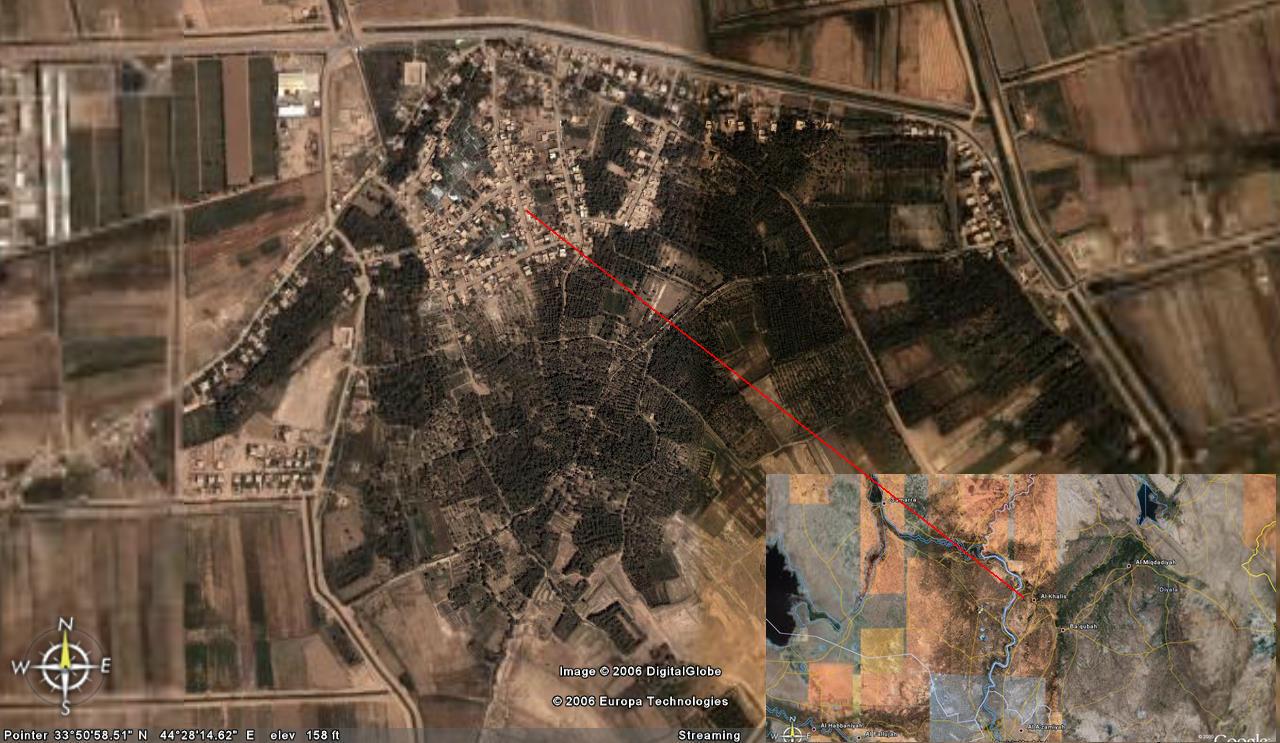
Hibhib is a small town several kilometers to the northwest of Baquba and most of its people are from the Azzawi tribes.
This small town was traditionally nicknamed Um al-Arak as it was famous for producing some of the finest Arak in Iraq, an industry that flourished in the area for the abundance of date palms. It's even said that Hibhib's Arak can make the fox get drunk!

Hibhib is located 8 km to the northwest of Baquba and 50 km to the northeast of Baghdad

Of course that was before the Salafi Zarqawi tide reached this once peaceful town.
It was quite visible lately that Hibhib became a place for intense terror activity, especially after the phenomenon of severed heads appeared. Severed heads of civilian Iraqis were found twice in fruit boxes in and around Hibhib; a terrible crime that shocked Iraqis.
Also a few days ago 19 passengers, mostly students were murdered in cold blood just north of Hibhib which indicated that a seriously bloody terror cell was in this area.

There had been several reports about Zarqawi fleeing Anbar to Diyala after the tribes in Ramadi turned against al-Qaeda but obviously, Diyala and its suburbs and Iraqi tribes were not willing to endorse the head chopping criminal.


In the first official confirmation, PM al-Maliki said that Jordan has provided intelligence that was used in the raid on Zaraqwi's hiding place but he also stressed that tips from locals were the primary lead to Zarqawi's exact location and these were the information according to which the missiles were guided.

Al-Maliki said that among the 7 killed with Zarqawi were two women who were responsible for collecting intelligence for the al-Qaeda HQ cell.

Wednesday, June 07, 2006

The Salhiya mass abduction.

perhaps one of the most shocking security incidents that took the headlines inside and outside Iraq was the one when gunmen dressed in military uniforms riding police-like vehicles seized 50 men in Salhiya district in central western Baghdad a couple of days ago.

The common first reaction after reading the news reports was one of astonishment by the exceptionally challenging nature of this operation as the operation took place in the center of the capital in a supposedly well guarded area and in broad day light but as we dig deeper into the circumstances of the incident, it looks like this case can be more complex than we thought it was in the beginning.

I had a long conversation with some of my friends on this particular case and tried to analyze some of its sides using the little knowledge and analysis skill we have.

What we found basically suggests that the raid could've possibly been conducted by government forces and not terrorists, yet not by the regular government forces.
In other words he suggests that a security corps not related to the defense or interior ministries was possibly behind the raid in an attempt form the government (or some other entity) to find "shortcuts" for eliminating terror cells in Baghdad without having to go through courts and time-consuming police investigations and paperwork.

The nature of the target and the scene and timing of the operation supports this theory in a way; most drivers and workers in travel agencies are from areas through which the road to Jordan and Syria passes through, i.e. they belong to Arab Sunni tribes and have secured some sort of a treaty with influential powers in that region and they use this advantage to pass back and forth safely through this dangerous long highway. These drivers are the only ones capable of doing this right now after many Shia drivers were killed on the road by al-Qaeda or local insurgent groups. Moreover, there were 2 Syrian nationals among those 50 men.

This leads to conclusion #1: Those kidnapped/arrested probably had ties with local insurgents and/or al-Qaeda in Iraq, especially in the western region of the country.

The idea that it's a death squad operation is unlikely for one reason; the location and time at which the operation took place indicate that the raiders were confident and fearless, and the scale of the operation and the magnitude of the raiding force indicates that high ranking officers know about it and if these officers are corrupt and running death squads they will be expected to not mess with the other wing of the insurgency (I'm talking about operations organized at commanders level who receive direct or indirect orders from Syria or Iran). I realize that many people still find it hard to believe that Syria-backed al-Qaeda and Sunni extremists are working side by side with Iran-backed death squads. And whether the trigger pullers know this or not isn't of value here but I'm positive that commanders on both sides know who their allies are.

This leads to conclusion #2: If Iran is behind death squads in Iraq (which is what most of us believe to be the case) then Iran and death squads were not behind this one and it wasn't an operation motivated by sectarian tensions.


In short, it is quite possible that this operation was conducted by an independent security corps taking orders directly from the president, PM or US military to strike a particular target quickly and without the hassle of traditional justice…a legitimate force, maybe a special counter-terrorism force or one belonging to the Iraqi intelligence/military intelligence service but performing operations in a dirty (yet effective) way, capturing suspects, forcefully interrogating them and executing those found guilty and releasing those found innocent.

The fact that 13 of the 50 were released last night and found by the police in Baghdad supports this theory to some extent. Those 13 men were found alive but had torture marks on their bodies.

A death squad or a terror cell wouldn't have spared any.