Only hours separate us from a major historic day for our nation (too many historic days for Iraq in these two years!). Tomorrow will draw a line that would mark the beginning of a new era in Iraq; a constitutional Iraq will become reality.
It’s only a beginning since there will be more steps to go but it’s the right beginning because it’s a transition from temporary laws to a permanent-though amendable-constitution on which the people will assume control through their elected representatives and through their own direct votes.
It is really amazing how things have changed in Iraq; three years ago Saddam “won” 100% of the votes in a pathetic referendum that he designed in order to give legitimacy to his reign while yesterday even security detainees were allowed to express their opinion on the constitution through voting and the government and parliament are almost begging the 15 million plus voters to say ‘yes’!
And although many signs indicate that the document is on its way to be ratified, no one can say it is until the people decide which checkbox to tic tomorrow.
Some people would say “Is that all you won, after more than two years of war and violence? That’s only one basic right” well, that is the point; we’ve secured one key right that can help us secure the rest.
Approving this draft is not the end goal, it’s a step among others in this process of evolution in Iraq and it’s going to be the gate to more steps until we reach the day when we have a constitution that satisfies and serves the greatest majority of the people.
Now let me take you in a short journey in Baghdad; I woke up this morning and decided to take a tour to see Baghdad preparing for the referendum, first thing I saw and surprised me was a leaflet thrown in front of our door. It was calling for a ‘NO’ stating 10 reasons for doing that. I read the leaflet that had the Ba’athist tone with five out of 10 of the points said that approving this draft constitution is a Zionist goal. I tried hard to find a connection and of course there wasn’t any and it looked like a desperate attempt to use conspiracy theories.
To give you an example of the points in that paper I’ll tell you what one point was “what if an Iraqi woman married an Israeli man? Should we grant their children the Iraqi nationality!!!???” and yes, they used way too many exclamation points and question marks.
I walked away feeling more willing to vote with ‘yes’. Baghdad’s streets weren’t crowded as they usually are and checkpoints were everywhere and roads leading to the voting stations were mostly blocked. Most of these stations are located inside the buildings of schools and these in turn are inside residential blocks which makes them easier to protect.
People on the street, TV and radio are all talking about the coming historic event while papers went on hiatus since yesterday but many of them published the document on Wednesday to ensure that more people get to read it.
Although the distribution didn’t go perfectly, I doubt there are many who didn’t get the chance to take a look as the document was published many times on different outlets including websites and there were many discussions on TV where articles were discusses thoroughly. Add to this the thousands of workshops and lectures organized by NGOs. So I think it’s fair to say that only those who weren’t interested in the subject would say that they didn’t have the chance to read the document.
Of course SMSs on cell phones were also utilized for advertising this or that point of view. Yesterday I received an SMS from a Turkmen friend of mine asking me to vote ‘no’ and to forward the message to 10 other contacts!
Actually the Turkmen front decided to reject the draft some time ago and some Assyrian powers in Kirkuk joined them too so it is expected that we’re going to see many ‘no’ ballots in Kirkuk.
In Baghdad, some districts witnessed rallies celebrating the agreement between the Sunni .and the Kurdish and Sheat leaders on the constitution and people were flying Iraqi flags and firing fireworks.
The walls are covered by many of thousands of posters and banners; most of which encourage a ‘yes’ while some call for a ‘no’. The association of Muslim scholars accused the security forces of tearing their posters but in fact I saw many torn posters from both sides.
On the other hand, the Islamic Party is winning the respect of Iraqis for its courage and role in pushing the process forward; actually it’s a rare occasion where secular people thank and support a religious party for doing something. This can be understood when remembering that secular parties will be the ones to benefit more from the aftermath of this after the new parliament is elected.
In my opinion, this morning’s attacks on the offices of this party prove our idea when we said that no reconciliation is needed in Iraq and when we said that civil war in Iraq is not a strong possibility. It has shown that the conflict is not between the average citizens themselves but it’s rather a conflict between the average Iraqis and the terrorists and it has shown clear that this terrorism is not sectarian in nature but it’s in fact one of politics and interests.
I am so excited but a flashback from Saddam’s referendum three years ago still hurts; he wanted a 100% as the 99.96% of the previous one shocked the dictator. I was depressed that way and I decided not to go to the voting office and so did the rest of the family but my father was afraid that not going could be dangerous.
He said that maybe one member of the family could go alone and cast votes for the rest of us. We looked at each other thinking who’s going to volunteer to do this ugly job to protect the family. At that moment my father said “it was my generation that caused the misery we’re living in so I’m the one who should do this”.
I couldn’t stop him and I couldn’t utter a word but I felt sad for him; his sacrifice was big and I had teary eyes when I watched him taking our papers and heading out.
It is different this time father, no more 100% and a ‘no’ would make me happy just like a ’yes’ would do and no one ever will force us to do something against our will anymore.
Tomorrow will be another day for Iraqi bravery. May God protect you my people…you have suffered so much and you will still be suffering for some time but I am sure the future will be bright.
God bless you my people and all the freedom lovers who keep sacrificing to make this world a better place.

New points of view about the future of Iraq and the Middle East.
Friday, October 14, 2005

Wednesday, October 12, 2005
The Day of National Accord.
At this moment, the National Assembly is holding a ceremony celebrating the new breakthrough agreement on the constitution which President Talbani described as the “Day of National Accord”.
The ceremony is attended by the ministers of the cabinet as well as the presidency council and the president of the Kurdistan region, Masoud Barzani.
In the same respect, the Board of Sunni Endowment, another important Sunni body that stands for the former ministry of religious affairs welcomed the Islamic Party’s decision to endorse the constitution.
Meanwhile, Ayad Al-Sammarrai the deputy secretary of the Islamic Party gave a statement in which he rejected the objections of the Conference of National Dialogue to today’s agreement “we were demanding for the transfer of 4 articles from the draft to the next parliament and that was in accord with the Dialogue Conference and the Muslim Scholars and today we got more than we asked for and the whole document will be subject to amendments…” said Al-Samarrai who considered this agreement a victory for the “marginalized” who should seize the opportunity and merge with the ongoing process.
It seems that nothing can satisfy the Muslim Scholars, not even changing the entire document because all they want is to carry out the plans of the neighboring dictators by putting hurdles in the way of democracy.
What happened today is a historic event that will isolate the enemies of Iraq and freedom and will pave the way for a clear future for Iraq after important Sunni groups decided to actively join the political process in Iraq.
There’s a visible feeling of relief on the streets and I think the constitution is on the way to be ratified…the process has come out of the emergency room and recovery will follow.
One last thing, in a nice change of protocol, the ceremony that was started with reading a few verses from the Quran was ended with a nice short piece of music!
A last minute agreement brings a more flexible constitution...
A surprising change of attitude by the Iraqi Islamic Party has dramatically shifted the balance towards ratifying the draft constitution.
An accord to approve the document has been reached and announced today in Baghdad between Iraqi Sheat, Kurdish and Sunni prominent political leaders after it seemed that all Sunni parties were going to encourage voters to vote ‘no’.
This move of the Islamic Party came as a shock to other Sunni groups especially the National Dialogue Conference and the Association of Muslim Scholars; Spokesmen of these two groups were interviewed by Al-Arabiya TV a few hours ago and they literally didn’t know what to say with confusion and denial clear on their faces especially that last week they signed an agreement with the Islamic Party to reject the constitution.
I think this breakthrough shows the difference between the way political parties deal with things when compared to clerics and ex-Ba’athists like Mutlaq of the Dialogue Conference who still adopt a stiff stand and apparently like to oppose just to stop things from progressing; the Islamic Party weighed things in a smart way and took the decision to change their attitude when the other involved parties showed active will to work things out and override obstacles.
What I consider most important and encouraging is this part of the agreement:
This will give hope not to the Sunni only but also to the secular powers and other minorities who feel they were marginalized during the writing of the draft.
This way, amendments will be possible to propose only two months after the December elections and not eight years as was written in the draft before this agreement.
I like this new rule and I think I will change my mind and vote with ‘yes’ as I wasn’t feeling prepared to accept the constitution as it is for whole eight years but now I feel much more hopeful.
The struggle for amendments will naturally be tough and tiring but no pain no gain they say.
An accord to approve the document has been reached and announced today in Baghdad between Iraqi Sheat, Kurdish and Sunni prominent political leaders after it seemed that all Sunni parties were going to encourage voters to vote ‘no’.
Iraqi Shiite, Kurdish and Sunni political leaders today said they agreed on changes to the proposed constitution, which may ensure that voters approve the document in the Oct. 15 referendum.
``All obstacles to the approval of the constitution have been removed,'' President Jalal Talabani, a Kurd, said at a news conference in the capital, Baghdad, carried live by al-Jazeera television. ``I hope this will be the beginning of a new kind of cooperation between all Iraqis.''
This move of the Islamic Party came as a shock to other Sunni groups especially the National Dialogue Conference and the Association of Muslim Scholars; Spokesmen of these two groups were interviewed by Al-Arabiya TV a few hours ago and they literally didn’t know what to say with confusion and denial clear on their faces especially that last week they signed an agreement with the Islamic Party to reject the constitution.
I think this breakthrough shows the difference between the way political parties deal with things when compared to clerics and ex-Ba’athists like Mutlaq of the Dialogue Conference who still adopt a stiff stand and apparently like to oppose just to stop things from progressing; the Islamic Party weighed things in a smart way and took the decision to change their attitude when the other involved parties showed active will to work things out and override obstacles.
What I consider most important and encouraging is this part of the agreement:
Under the agreement a panel will be created to propose amendments to the charter after elections for a new government in December. The panel will be appointed within four months from now and may give Sunnis, who said they were excluded from the drafting process, an opportunity to help redraft the document.
This will give hope not to the Sunni only but also to the secular powers and other minorities who feel they were marginalized during the writing of the draft.
This way, amendments will be possible to propose only two months after the December elections and not eight years as was written in the draft before this agreement.
I like this new rule and I think I will change my mind and vote with ‘yes’ as I wasn’t feeling prepared to accept the constitution as it is for whole eight years but now I feel much more hopeful.
The struggle for amendments will naturally be tough and tiring but no pain no gain they say.
Sunday, October 09, 2005
The Arab League solving Iraq's problems? Yeah sure...
The league of Arab tyrants, er I mean countries has sent delegates to Iraq to prepare for the expected visit of the secretary general of the league Amr Mousa.
The announced purpose of the Mousa’s visit is to arrange for a national “reconciliation” conference supposedly in order to bridge the gap between different factions of Iraqi community.
However, Iraqi MP Jawad Al-Maliki the 2nd man in Jafari’s Dawa party said that news has leaked telling that Mousa put paying Saddam Hussein a visit in his jail on the schedule of his visit to Iraq.
Al-Mailiki added that this visit to Saddam would aim at including Saddam and the Ba’ath in the “reconciliation” plan and Al-Maliki said that his bloc would probably be calling for a vote in the parliament to stop Mousa from coming to Iraq..!!
While there’s no way to verify these claims I wouldn’t be shocked if it turned out to be true.
I don’t know whose idea was it to invite the league into Iraq but it was a very dumb idea, that’s what I’m sure of; this league can do nothing good for Iraq and actually I’d prefer they leave us alone or even kick us out of their league of corruption and tyranny.
Iraq now isn’t qualified to be a member of the league (in the league’s standards of qualifications; that’s being pan-Arab fascists ruled by a mentally retarded sociopath) and I hope we don’t get qualified at all.
Can anyone tell me how are we supposed to believe that the ones who caused the trouble in the first place have the intention to help solve it now?
I don’t think the league is the least sad about the bad things happening in Iraq, I actually can pictures them laughing and celebrating each and every death in Iraq and they keep pouring more doom and gloom into the scene as that is what they really want to see. And I have what supports this attitude; since April 2003 and even long time before that, all Arab regimes (except for Kuwait) stood against toppling Saddam, of course not out of care for the Iraqi people but out of fear from seeing the same scenario happen again in their countries. We have a saying here that goes like this “if you see your neighbor’s bear being shaved, spray water on yours”.
The tyrant in Iraq built his hopes on the Arab methodology of supporting God-like-rulers and he invested Iraq’s resources in this effort.
Perhaps you remember the corrupt contracts of the oil for food program with Arab countries like Egypt, Syria and Jordan where billions of dollars were wasted on items that weren’t worth one third the amounts written in those contracts.
Saddam also hired the Arabic media to promote his regime and defend his position, and please I don’t want to hear anyone telling me that Arabic media is not biased; according to a research a read last week on the moderate Al-Sharq Al-Awsat it was found that 15 billion dollars are spent per year by the media while the incomes are just slightly above 1.5 billions!!
So who’s covering the 13.5 billion dollar difference?
Arabs have showed Iraq’s case to the public in a mutilated way and they sent murderers to kill us and recruited every terrorist against us and now comes the tyrants’ clown to say that he wants to help draw Iraq’s future. To hell with a future and a “reconciliation” planned by Mousa.
Friday, October 07, 2005
Zarqawi in defiance of his master’s warning…
Abu Musaab Al-Zarqawi, the leader of Al-Qaeda in Iraq said in an audio tape dated October 7 that the militants under the principles of Islam have what justifies killing civilian infidels.
The audio tape thought to be by Zarqawi’s voice was published on website believed to be owned by Al-Qaeda in Iraq and it his speech, Zarqawi said that Islam doesn’t distinguish between people on the basis of civilian vs. military but on the basis of Muslim vs. kaffir (infidel) and that “an infidel’s blood should be spilled regardless of his occupation or position unless he had a treaty or a promise of peace”. Al-Arabiya reported.
However, Zarqawi had already declared that he believes the word “Muslim” doesn’t apply to Sheat Iraqis whom he described as "heretics collaboration with the infidel occupiers" and with he used that pretext to justify waging war on the Sheat.
The audio tape appeared one day after the pentagon released an intercepted letter that is believed was sent from Ayman Al-Zawahiri to Zarqawi warning him from undesirable consequences that might result from continuing some wrongful policies of “jihad” in Iraq like attacking mosques and civilians:
Zarqawi in this tape-other than rejecting the advice of his superiors-also contradicts himself and the principles of Islam twice and this is not unusual since he’s not an actual religious scholar:
The first point where his words contradict his doings as well as the teachings of Islam appears when he said “the blood of a Muslim shall be protected regardless of his work or position” yet in a previous audio tape he justified killing Muslims if they were standing between the jihadists and the enemy.
Add to this, he justified killing Sheats in Iraq because they continue to assist the occupiers and this contradicts his “regardless of work or position” in the latest tape.
The second contradiction lies in saying “an infidel’s blood should be spilled regardless of his occupation or position unless he had a treaty or a promise of peace” and here are two points of contradiction as well, the first is that Christians and Jews are not infidels under the principles of Islam and the second is that multinational troops in Iraq (considering that they’re infidels) are here according to a treaty between the native people of Iraq and the countries to which the troops belong.
Anyway, I think that this conflict between the higher command of Al-Qaeda and the regional command in Iraq represented by Zarqawi will result in decreasing the moral support Al-Qeada in Iraq receives from other "pure" jihadists but will not have an effect on the material support that comes from the neighboring regimes that want to destabilize Iraq; these regimes will continue to pump money and weapons into Iraq and they will continue to provide training camps for recruits and will keep facilitating their passage into Iraq but most likely the numbers of these recruits will decrease since they (the potential jihadists) appear to have more faith in the ideology of the higher leaders of the network rather than in Zarqawi who’s considered an executive or field commander rather than an ideological leader.
The audio tape thought to be by Zarqawi’s voice was published on website believed to be owned by Al-Qaeda in Iraq and it his speech, Zarqawi said that Islam doesn’t distinguish between people on the basis of civilian vs. military but on the basis of Muslim vs. kaffir (infidel) and that “an infidel’s blood should be spilled regardless of his occupation or position unless he had a treaty or a promise of peace”. Al-Arabiya reported.
However, Zarqawi had already declared that he believes the word “Muslim” doesn’t apply to Sheat Iraqis whom he described as "heretics collaboration with the infidel occupiers" and with he used that pretext to justify waging war on the Sheat.
The audio tape appeared one day after the pentagon released an intercepted letter that is believed was sent from Ayman Al-Zawahiri to Zarqawi warning him from undesirable consequences that might result from continuing some wrongful policies of “jihad” in Iraq like attacking mosques and civilians:
Zawahiri apparently warns tactics such as the killing of hostages and bombings of mosques may alienate the "Muslim masses," Mr Whitman said.
"In this letter, he talks about believing that the eventual governance of Iraq must include the Muslim masses, and that they are at risk of alienating those," he told reporters.
Zarqawi in this tape-other than rejecting the advice of his superiors-also contradicts himself and the principles of Islam twice and this is not unusual since he’s not an actual religious scholar:
The first point where his words contradict his doings as well as the teachings of Islam appears when he said “the blood of a Muslim shall be protected regardless of his work or position” yet in a previous audio tape he justified killing Muslims if they were standing between the jihadists and the enemy.
Add to this, he justified killing Sheats in Iraq because they continue to assist the occupiers and this contradicts his “regardless of work or position” in the latest tape.
The second contradiction lies in saying “an infidel’s blood should be spilled regardless of his occupation or position unless he had a treaty or a promise of peace” and here are two points of contradiction as well, the first is that Christians and Jews are not infidels under the principles of Islam and the second is that multinational troops in Iraq (considering that they’re infidels) are here according to a treaty between the native people of Iraq and the countries to which the troops belong.
Anyway, I think that this conflict between the higher command of Al-Qaeda and the regional command in Iraq represented by Zarqawi will result in decreasing the moral support Al-Qeada in Iraq receives from other "pure" jihadists but will not have an effect on the material support that comes from the neighboring regimes that want to destabilize Iraq; these regimes will continue to pump money and weapons into Iraq and they will continue to provide training camps for recruits and will keep facilitating their passage into Iraq but most likely the numbers of these recruits will decrease since they (the potential jihadists) appear to have more faith in the ideology of the higher leaders of the network rather than in Zarqawi who’s considered an executive or field commander rather than an ideological leader.
Wednesday, October 05, 2005
School kids pay tribute to Iraqi soldiers and policemen, a nice gesture organized and sponsored by friends of democracy...
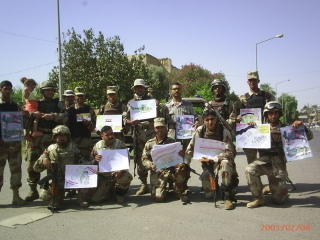
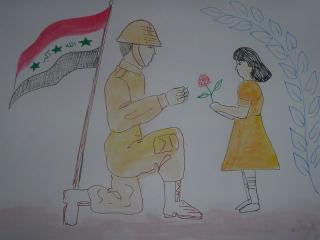
Details here.
And more photos here.


Details here.
And more photos here.
It was a positive step for the National Assembly to reverse their earlier decision of altering the voting rules of the referendum because that outrageous alteration raised intense contempt in the public opinion here that even those who were hoping to see the constitution pass didn’t like the alterations because they don’t want it to pass with cheating and I call it cheating because that’s what it would be and it took the Assembly down to a level that doesn’t reflect the huge national sacrifices that paved the way for this group of people to become the law makers of Iraq.
The National Assembly has lost a big chunk of its credibility and today’s correction cannot remove the scar caused by yesterday’s blunder.
Although I have my objections to several articles of the draft constitution, I will certainly respect my people’s choice and I do believe that half a step forward is still better than many steps backward.
I still see this constitution as an upgradeable project that can be improved for better performance in the future and it’s much better than the no-constitution-state and the chaos that would accompany that.
Tuesday, October 04, 2005
The Iraqi National Assembly took a very worrisome step by abolishing the value of Iraqis’ votes in the upcoming referendum through giving two different interpretations of the word “voter” in the law that will govern the referendum and decide whether the draft constitution is ratified or not.
In response, the UN has refused this change in the referendum laws and asked the Assembly to take fast action to correct this contradiction:
The change that was introduced lately by the Assembly would call the draft constitution ratified if more than 50% of actual voters voted with “yes” but in another sentence in the same rule which states that the draft constitution would be considered rejected if two thirds of the voters in three provinces voted with “no” the word “voters” was interpreted as registered voters not actual voters.
The above means that the government is far more interested in approving the draft constitution than it is in having the people freely decide for their future and I frankly do not know how people are supposed to trust a government that is literally playing with words and planning to deny them their right to decide on a super-important issue like their nation's constitution.
I wasn't worried at all when the final draft came with several articles I didn't agree with since I thought my voice would count and could change things in either direction but now?
Now I feel like I'm facing a challenge of having my voice ignored and hijacked again and that is something I cannot accept.
In response, the UN has refused this change in the referendum laws and asked the Assembly to take fast action to correct this contradiction:
We have expressed our position to the national assembly and to the leadership of the government and told them that the decision that was taken was not acceptable and would not meet international standards," Jose Aranaz, a legal adviser to the U.N. electoral team in Iraq...
The change that was introduced lately by the Assembly would call the draft constitution ratified if more than 50% of actual voters voted with “yes” but in another sentence in the same rule which states that the draft constitution would be considered rejected if two thirds of the voters in three provinces voted with “no” the word “voters” was interpreted as registered voters not actual voters.
Iraq's parliament made a ruling on Sunday determining that for the Oct. 15 referendum to pass only half of those who turn out to vote across the country would have to say "Yes".
But a clause setting a two-thirds "No" vote in at least three of 18 provinces as a veto on the charter would be interpreted to mean two thirds of all registered, rather than actual, voters.
In other words, the word "voter" in the interim constitution was being interpreted in two different ways in the same article.
The above means that the government is far more interested in approving the draft constitution than it is in having the people freely decide for their future and I frankly do not know how people are supposed to trust a government that is literally playing with words and planning to deny them their right to decide on a super-important issue like their nation's constitution.
I wasn't worried at all when the final draft came with several articles I didn't agree with since I thought my voice would count and could change things in either direction but now?
Now I feel like I'm facing a challenge of having my voice ignored and hijacked again and that is something I cannot accept.
The ministry of religious affairs in Saudi Arabia limited using loudspeakers in mosques to calls for prayers and the Friday preaching only as well as the two Eid prayers while using loudspeakers during regular prayers and sessions of religious studies in mosques has been banned banned.
In addition to that, the number of loudspeakers allowed in each mosque has been limited to four speakers only. This is what Al-Sharq Al-Awsat reported yesterday.
The paper explains that this decision was finally made after people began to “increasingly complain from the loud noise of preachers” while they teach their students and because sounds of prayers in different mosques were mixing and thus distracting the worshippers who in some cases were praying in a mosque but listening to the Quran coming from another one!
The article tells a story about one Saudi resident who came home once to find that his children were crying and when he asked about the reason they said that the preacher in the nearby mosque was talking and crying so they cried with him because “his weeping was scary”…
In Iraq we have the same problem though not in the same extreme way as it is in Saudi Arabia because they have more mosques there and add to this that we don’t have electricity all the time so mosques cannot operate their loudspeakers at every prayer time and this spares us a great deal of the suffering and protects our eardrums!
Still what makes things unbearable in some cases is the ugly voices of some preachers, yet they insist on shouting through loudspeakers; I still remember one mu’athin (the man who reads the call for prayers) who used to call for the dawn prayer in the mosque that was a few hundred meters from our house and man! He had one of the ugliest voices I’ve ever heard; something very close to an air-raid siren.that was a real pain in the neck for the entire block for several years.
Anyway, this step in Saudi Arabia marks a significant change in the attitude of the community and I’m sure it took a lot of courage from people to publicly complain from the inconvenience caused by mosques and preachers; entities that were considered so holy and divine for centuries. I guess the idea of what-gets-abundant-loses-respect applies to the mosques here.
Unfortunately in Iraq, we seem to be trying to “reinvent the wheel” like we say here and I really don’t know some parties want Iraq to go through the whole mistake of letting religion interfere with every aspect of life before the society revolts to put things right and give everything what it really deserves.
It’s not the issue of loudspeakers that I’m concerned about, that’s only the tip of the iceberg as most of you know.
Wisdom says smart people should learn from others’ mistakes and I frankly don’t think our leading class has absorbed this part.
Monday, October 03, 2005
God curse your moustache you Bedouin on a camel!!
The Iraqi government right now is facing so many hardships in the last few months of its age until the elections come. And while the officials are trying hard to prove their administrative and functional control over government institutions, challenges are escalating which render the government almost paralyzed between old and new problems and upcoming challenges represented mainly by the success of the constitution in the October referendum.
It’s noticeable now that people inside the government seem more concerned about internal conflicts than they are about real major concerns like securing the country; the arguments and so visible between the parties involved in the alliance that has proven to be brittle and probably the Kurdish-Sheat dispute that surfaced lately was more like a result of the building differences resulting from fighting over power and influence in the government.
The two memorandums sent recently from the Kurdish leaders to the PM Jafari were-despite their demanding nature-were an attempt to get over the dispute but the memorandums were totally ignored and that made the Kurds so pissed off to the extent that Talbani Asked Jafari to step down!
The dispute exploded when violent clashes erupted between the guards of president Talbani and those of PM Jafari over a presidential palace that American troops decided to evacuate a few days ago, of course the news weren’t reported in the local media but it circulated in the streets.
It seems that we’re standing before a situation that made the involved parties feel ashamed of the dispute that descended to the level of fighting over a house more or less and this resulted in loss of trust and confidence in the current government and for the first time we see Jafari on TV looking so embarrassed when asked about details of the incident and his answers were tense and diplomatically unacceptable especially when he said ”I do not have the time to respond to personal claims such as these..” in reference to Talbani’s accusations to Jafari of having violated his authorities.
It looks clear now that the export-the-crisis is still considered a valid policy for Iraqi politicians and that’s in my opinion why interior minister Bayan Jebor made his inflammatory statement against the Saudi foreign minister so that they shifted attention away from the Kurdish-Sheat conflict.
As a matter of fact, Jebor’s statement was welcomed by some Iraqis who to whom this statement came as some sort of “anger relief” against the negative attitudes of Arab countries and maybe his most influential and controversial line was “A Bedouin on a camel cannot teach us democracy and human rights…” and “let Saudi women be allowed to drive cars first before Saudis can talk about Iraq’s internal affairs…”.
These lines have become common in daily conversations among Iraqis (in refusal more than applause) but at least here in Baghdad and the south some seem to like it, however I don’t think they were met with the same enthusiasm in the western and northern regions where Jebor is thought of as nothing but an agent for Iran and people over there do not see him qualified or fit for a sensitive post like the interior ministry. Let alone that comments like Jebor’s reminded many Iraqis of the way Saddam and his aides talked to others, one famous example happened in early 2003 when Ezzat Douri siad “God curse your moustache” to the Kuwaiti foreign minister in an Arab League summit.
There are even rumors circulating in the Sunni areas that Jebor came to office in a mission to eliminate Sunni scientists, clerics and figures and while these are rumors far from being confirmed they show how Jebor is viewed by a considerable segment of the people.
As a response and an attempt to attack Jebor rather than to please the Saudis, Hoshyar Zibari said that Jebor’s statements were “regretful and inappropriate” and he apologized to the Saudi minister for Jebor’s words.
Right now most Iraqis are looking forward to a new government with greater hopes since it’s going to be there for whole four years and this shall give people the impression that we have the time to improve the situation and would be telling the terrorists that “we’re here for four years and you’ve got to realize that we’re ready for a long battle, are you ready for such a long battle too?”.
Electing a new government for a four year term in which the Sunni will probably be fairly represented would be a powerful strike to those who believe in violence and these will find themselves facing a more legitimate government that cannot be easily discredited and they will also lose the pretext of fighting to defend the “oppressed” Sunni who are preparing very well for entering the elections.
In the January elections we had 111 competing parties and alliances but this time the number has greatly increased to around 190 and it is encouraging to know hat most of the new 80 registered parties come from regions of Sunni majority.
The pointers now give an advantage to Allawi’s new alliance over other alliances because of the increased Sunni inclination to join him, while other blocs like the Sheat alliance has witnessed at least one crack in its lines when Dr. Ali Al-Dabbagh who is so close to Sistani’s office and a former spokesman of the alliance announced his departure and the formation of a new party of his own.
This comes while Chalabi is trying to keep the different parts of the bloc together but he doesn’t seem to be making big successes since the poor performance of the government will force a change in the for and strategies of the alliance.
Actually the entire scene changed when the Sunni entered the arena and even the Kurds who had a strong political establishment began to modify their ways and are now trying to convince Arabs to join them to guarantee a percentage of the parliament seats that preserves balance in the after the new elections; so far the National Democratic Party of the former GC member Naseer Chaderchi (after it was thought that he joined Allawi) have joined the Kurdish alliance together with the Qasimi movement, the Iraqi Communist Party and the Arabic Socialist movement.
The feeling that the road is going to be rough and costly is growing but hope isn’t lost though and I have seen this clear in the eyes of an Iraqi who talked on TV, this man lost two brothers in the Balad massacre a few days ago yet he said “freedom isn’t for free”.
Saturday, October 01, 2005
A Baghdad night of poetry...
Yesterday the "Baghdad's lovers" society held the last of its summer nights which included among its activities a session of literature and poetry in one of Baghdad's old and famous social clubs the "Hunting Club".
I was glad that I received an invitation to attend the event and actually I wasn't surprised to see the size of the great crowd of interested people who challenged night and terror just to listen to a few poems and critique them.
The hall got full of people and we lived a few hours completely far from every day's pain and worries though pain and sorrow were part of the poems that our brilliant lecturer read which also included many verses that were written for our adored Baghdad.
At the end of the evening, a woman from the audience seized the microphone and spoke to the rest of us:
We must keep up the constructive activities of art, literature and poetry and show the terrorists that they can never steal our humanity or kill the spirit of creation inside us….
His words kept ringing in my head while I was on my way out of the club; the sound of bullets was loud out there but I didn't care just like that brave women didn't care and Baghdad's nights shall always inspire the creative.
I told myself then; they're losing and we are winning.
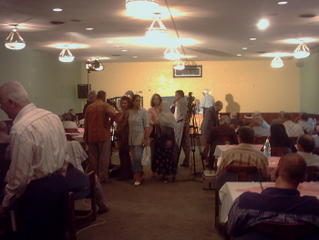
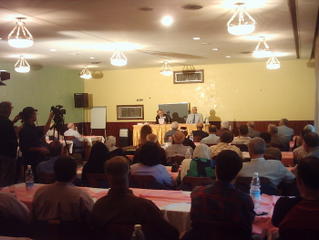
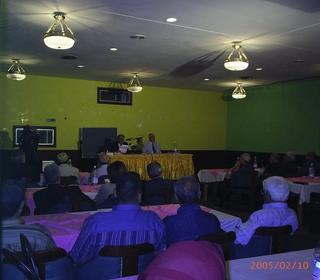
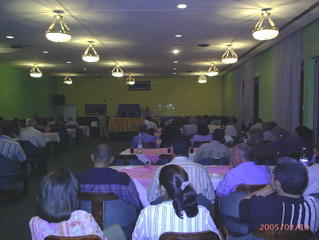
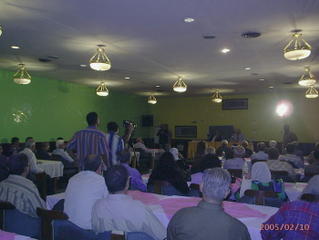
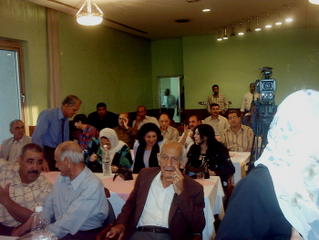
I was glad that I received an invitation to attend the event and actually I wasn't surprised to see the size of the great crowd of interested people who challenged night and terror just to listen to a few poems and critique them.
The hall got full of people and we lived a few hours completely far from every day's pain and worries though pain and sorrow were part of the poems that our brilliant lecturer read which also included many verses that were written for our adored Baghdad.
At the end of the evening, a woman from the audience seized the microphone and spoke to the rest of us:
We must keep up the constructive activities of art, literature and poetry and show the terrorists that they can never steal our humanity or kill the spirit of creation inside us….
His words kept ringing in my head while I was on my way out of the club; the sound of bullets was loud out there but I didn't care just like that brave women didn't care and Baghdad's nights shall always inspire the creative.
I told myself then; they're losing and we are winning.


Wednesday, September 28, 2005
Today, American forces in the city of Kerbala officially handed over security responsibilities to Iraqi army and police units in the city.
This makes Kerbala the second Iraqi province that undergoes this transition of power after a similar step was taken in Najaf nearly two months ago.
The event which was attended by military and civil officials from both parties also included a parade for the Iraqi units that are going to assume responsibility for peace keeping tasks in Kerbala.
Unfortunately no web links are available at the moment as the only source that reported the news was Al-Hurra TV. However web links will be added to this piece once available.
From the home town of Gilgamesh, friends of democracy has an interesting report on constitutional education workshops they're organizing there.
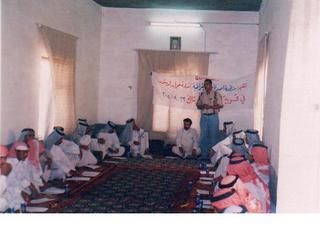
Like some of you, I wondered whether women were also included or not; I have been told that there were separate workshops for women due to the nature of the society in such conservative places. Photographs will hopefully be available soon.

Like some of you, I wondered whether women were also included or not; I have been told that there were separate workshops for women due to the nature of the society in such conservative places. Photographs will hopefully be available soon.
No one wants to come from outside to monitor the referendum? Fine!
Because Iraqi intellectuals, artists and writers have taken it upon themselves to do the tasks, Azzaman reports:
Isn't that great?
Because Iraqi intellectuals, artists and writers have taken it upon themselves to do the tasks, Azzaman reports:
In the absence of foreign monitors due to mounting violence, Iraqi writers, artists and other intellectuals have volunteered to oversee the referendum on the constitution scheduled for October 15.
The Independent Elections Commission, the body organizing ballots in Iraq, has responded positively to a call from Iraqi intellectuals to register as independent monitors.
“Thousands have already come forward and we expect the final figure to reach 40,000 monitors,” commission member Hussein Hindawi said.
Iraqi intellectuals have seven more days to come forward to register their names as independent monitors, Hindawi said.
The commission has formed 28 major groups with 14,000 members who intend to be present at the voting stations across the country.
The groups will be assisted by civil society organizations whose members advocate the establishment of a secular, multi-party and democratic system of government.
Hindawi said he sensed that the disparate Iraqi ethnic, religious and political groups are happy to have the intellectuals supervise the referendum.
“The initiative shows the high esteem the society holds this sublime and high-standing sector of the community,” said Hindawi.
He said the volunteering of this huge number of intellectuals despite security risk is proof “of how concerned and keen they are for the future of their country and people.”
The initiative was taken because it was increasingly difficult to have independent foreign monitors supervise the referendum.
Isn't that great?
Tuesday, September 27, 2005
As you can see, I'm facing some difficulties in putting the comments section back on track; actually haloscan is giving me a hard time. I tried to get things fixed but it doesn't seem to be responding.
This will take the priority until it's solved.
I appreciate your patience.
By the way, how do you like the new colors of the blog?
Seems solved to me, does it look right to you too?
This will take the priority until it's solved.
I appreciate your patience.
By the way, how do you like the new colors of the blog?
Seems solved to me, does it look right to you too?
"Baghdad city council discusses paying money to residents instead of the to be cancelled food rations"
This headline appeared on Al-Mashriq paper this morning, the report within says that the government's decision to stop distributing food rations is reaching the final steps of discussions and it will be adopted sometime next year.
The report attributes the decision to a deal between the government and the world bank and international trading organization; the deal is to provide Iraq with loans and grants up to 40 billion $ over a certain number of years for the purpose of reconstruction and development as well as giving Iraq a membership in the world trading organization. In return for that, Iraq has to fulfill a few requirements, one of which is to stop subsidizing whatever is being subsidized right now; food rations, electricity, fuel, phones…etc.
The lack of transparency on the government's part had given rise to suspicions about the reality of the shortages in fuel and the delay or complete absence of several items of the food rations and some people here think that these shortages and delays are actually a method invented by the government to prepare the people for the withdrawal of subsidization.
I am personally supportive of adopting free market policies in Iraq as that's an essential contributing factor for development and I also believe that stopping subsidizing fuel can put an end to the smuggling operations and their devastating effect on the economy since smuggling is only happening as a result of the huge difference in fuel prices between Iraq and the neighboring countries but why this lack of transparency?
All we heard from officials about this subject was foggy hints and evasive answers and this is wrong, especially when it comes to things in direct touch with people's daily life.
If you're not familiar with this blog, I encourage you to spend a few minutes to read the more or less weekly posts.
Liana who writes with the probably the best style and language among Iraqi bloggers usually writes about her personal life and a previous love story of her own but this time she's got a couple of posts talking about her first confrontation with the thugs of Saddam's regime.
Liana who writes with the probably the best style and language among Iraqi bloggers usually writes about her personal life and a previous love story of her own but this time she's got a couple of posts talking about her first confrontation with the thugs of Saddam's regime.
Monday, September 26, 2005
Jazeera reporter found guilty of terrorism.
Al-Jazeera's reporter in Spain, Tayseer Alluni has just been sentenced to seven years in jail after a Madrid court found him guilty of joining a terror cell and facilitating money laundry.
This is bad news for Al-jazeera who's been defending and campaigning to protect their reporter and they obviously failed in eluding justice but the question that we must think about is; was Alluni working on his own using his media credentials as a cover or could it be that Al-jazeera itself is involved?
It seems that twisting facts, biased coverage and supporting the terrorists morally aren't giving some media networks enough satisfaction so they began to give the terrorists a hand, practically I mean.
This is not the first time where reporters and camera men are found to have connections with terrorists so it is definitely time to start questioning the networks themselves and the people in charge of choosing reporters and sending them to join terror networks, sorry! I mean to report the truth!
Saturday, September 24, 2005
Blogging, constitution, elections and an "IPDP" update...
Sorry for not writing anything in the past few days; this was neither because there's nothing going on to talk about nor because we're getting lazy to do so! But it's pretty much because of the state of uncertainty, I mean everything happening in Iraq now is kind of partial, reversible and "portable" and here I'm talking about politics mainly.
Well, maybe that's not an accurate description of the situation. What bothers me is that local media is not doing the job they're supposed to do; they're either ignoring events, exaggerating them or glorifying them in a way that makes the right information rather difficult to get especially that the foreign media has failed to be a good source for information as well.
The above factors combined put s a blogger in a position that he should spend twice the time (if not more) to get a piece of info and more time to verify its accuracy and analyze it and we're from the type of bloggers who'd rather post less frequently than to copy-paste the stuff presented by a hundred other source.
Add to this that the public opinion here is confused and it's not easy to extract news and opinion from it which makes it even harder to blog genuine stuff.
So, I won't say that I was "idle" in the past two days because Mohammed and I were actually gathering info, analyzing them and discussing the findings to provide you with as informative posts as possible.
Now I'll stop whining and let's go back to Iraq and its politics…
I'll try to divide the subject into two parts, that will be the a)constitution b)the December elections.
Since drafting the constitution has ended some time ago, different trends are now trying to publicize their take on the constitution and to convince more people to take a decision to vote in a way that serves what these parties and trends want to see.
What is noticeable now is that no clear majority can be said to be on either side and although the draft was written and agreed upon by the largest two blocs in the National Assembly, followers and supporters of these blocs do not seem equally willing to vote with 'yes'.
And while no opposition to the constitution is coming from the Kurdish people, the division is more pronounced in the Sheat population as there's a sizeable percentage that opposed the federal state.
The Sunni politicians and parties also are pushing towards rejecting the constitution. However these politicians and parties are not representative of the Sunni Arabs and what they say may not reflect what the people want but in general it seems that more Sunnis are going to vote with 'no' on the October referendum.
The above distribution is supposed to cover roughly 90% of the population but in fact it does not as there are the secular trends, the communists and many independent people who do not follow this party or that faction.
The secular trends themselves have different opinions; some believe that the constitution is a step back to the dark ages and allows religion to take a bigger role than it should, thus these seculars want to vote the constitution down, give the people a chance to choose a new parliament to draft a new document.
These parties hope they can get more seats in the parliament so that they can influence the writing in a way that a more modern document can be produced.
The recent failures of the government in dealing with security and economic issues are seen as a positive sign by the seculars who think this can encourage more voters to choose them instead of the major-mostly religious-parties.
The other secular trend has another point of view; they see ratifying the constitution as a step forward as to the democratic process in general, so they seem more inclined to support the constitution as a first step but only to amend it later.
Such parties fear the failure of the constitution (which they see as half a step back) because they don't want the country to move two steps back where the country will need to start the process all over again.
There are also other religious and ethnic minorities who don't seem happy with what's been stated in the draft and they think their rights will be severely eroded under this constitution. Here we have mainly the Christians, Turkmen and the Shabak (who complained about their ethnic rights being ignored).
The Turkmen's opposition to the constitution comes from their age-old conflict over Kirkuk which is home town for people from both groups; still there are some Turkmen who sided with the Kurds and even others who sided with the Sheat alliance following their sectarian background.
The event of the week in this regard is the statement released from Sistani's office in which one of his aides said that Sistani advices Iraqis to vote with 'yes' and probably the "fatwa" will be officially declared within a few days.
This is not going to affect the people's decision like it did last time because the Sheat Iraqis have seen the disadvantages of following the wishes of the clergy and they will certainly be skeptical to some extent now.
So all I can say now is that the results of the referendum can not be accurately predicted at the moment and the outcome will depend to a great extent on the geographic distribution of votes throughout the country.
Election wise, parties and candidates are working fast to prepare themselves for the next competition by forming alliances and gathering public support, so far the IECI announced the registration of 42 political bodies that will be competing in December (the number was 111 in the January elections) and this attributed to more and more parties joining efforts to form bigger alliances to increase their chances of winning seats in the parliament especially that it is expected to need over 40,000 votes to win a single seat compared with 30,000 more or less last January since most signals indicate a higher turnout this time.
Among the most prominent emerging alliances is that of former PM Allawi who's most likely going to enter the elections as a major player and probably could win more seats than what the two major blocs did last time. Allawi is inviting everyone to join him and he's getting some good responses from other parties; the most significant addition was made by the major Sunni party, the Islamic Party which joined Allawi last week.
While this is happening, there are news that the Sheat alliance is suffering from serious divisions among its major components, namely observers expect Chalabi and vice president Aadil Abdulmahdi to depart the team and form their own secular-Sheat alliance.
While we're talking about elections and alliances, I'll seize the chance to give you the latest update on our party the "Iraq Pro-Democracy Party".
A week or so ago, our party merged with another Iraqi party that shares the same views and hopes for Iraq to form a new secular democratic trend that will enter the December elections and hopefully score better results this time.
I will of course keep you updated on this topic.
I'm done for now…
Wednesday, September 21, 2005
On Iraq's political scene...
The political scene in Iraq these days is full of events with the parties feeling that time for starting campaigning is approaching. However these campaigns took the form of exchanged attacks and accusations without presenting programs or platforms for development and reform which are much needed.
Perhaps the only player who preferred to act quietly is Allawi who stayed away from the lights while making continuous tours to gather support from as many parties and trends as possible to form a mid-liberal trend with no sectarian or ethnic identity. Actually it seems that he's making some success in his efforts as many well known, yet smaller parties joined his movement like the National Democratic Party of Naseer Chadarchi and the Independent Democrats movement of Adnan Pachachi (both men were former GC members).
Maybe what's going to assist Allawi this time is that he didn't join the cabinet although encouraged to do so by the Sheat and the Kurdish blocs; this together with the poor performance of the current government when compared to Allawi's made Allawi seen as a better alternative by many Iraqis especially that a new alliance backed by the clergy is not likely to appear anymore after the intense differences that emerged between the major players in the present alliance namely the SCIRI, the Da'wa, Fadheela Party and the Sadrists and the differences reached the degree of armed clashes in some cases after which the Sadrists said they will be entering the next elections alone.
Chalabi being the founding father of the alliance sensed the critical situation which made him make an announcement saying "I made the alliance and I can form a stronger one..." this announcement reflects the depth of the problems this alliance is going through, in the first time Chalabi remained silent while he built the alliance and he tried to stay away from the media but now I think he's facing a tough situation that pushed him to adopt this daring attitude and stop being silent.
On the other hand, the clergy and especially Sistani who felt embarrassed by the incompetent government he backed is not willing to go through the same experience again; one of Sistani's aides told the New Sabah paper that the clergy feels disappointed by the poor performance of the government and the clashes between the allied parties. This was followed by Sistani's declaration in which he banned using the name of the clergy in partisan campaigns.
In such atmospheres critical of the governmental performance, the governing parties found themselves surrounded in a weak position and took a decision to respond by releasing a controversial report accusing Allawi's cabinet of massive corruption.
This report which took a lot of attention and coverage in the past few days took the political battle to the lands of the opposition represented by the Iraqi bloc of Allawi and the former defense minister Hazim Sha'lan who's joining Allawi's alliance now after he formed his own movement.
Everyone here know how dangerous corruption is and we said it more than once that it is just as dangerous as terrorism so attempts to fight corruption are welcome but the latest report was lacking a mechanism for a solution or even the precursors for a plan and was more like a shot taken to weaken the position of the political opponents.
Sha'lan said that he was innocent from those accusations and that he keeps the original copies of the contracts while the government used photocopied (maybe fake) ones in their investigation. He explained that he kept the originals away because he expected that Iran-who's backing this government-would try to "destroy him" because of his previous confronting attitude against Iran during his term as defense minister.
Probably what made him the first target for Iranian plots was his statement when he said last year that he would "take the war to the streets of Tehran".
Another thing to be noted is that this report which was presented by Hadi Al-Amiri (Assembly member and head of the Badr organization) came right after the September 15 session of the cabinet headed by deputy PM Dr. Shawis and deputy PM Dr. Chalabi. This session that lasted for more than 5 hours was not attended by PM Jafari who was outside the country.
Jafari was criticized by his own cabinet members for his recurrent absence in such a difficult time and for the "poor strategy and techniques" being used in fighting terror, some ministers also said they believed that this "failing" strategy is escalating terrorism rather than fighting it; in this regard, Abdul Kareem Al-'Nizi the minister of national security called on Jafari to either resign or admit his failure and allow a new strategy to be made.
Dr. Sami Al-Mudaffar the education minister attacked Al-Iraqia TV and accused the channel of being the Iraqi copy of Al-Jazeera and feeding sectarian divisions especially after Jafari intervened to change its and Al-Sabah's paper directing staff.
The state owned paper and TV station are already losing their popularity among Iraqi audience and some started comparing it with Uday's Shabab TV as a new propaganda tool for the government similar to the old TV stations owned and run by the past regime.
At the end of the meeting, the cabinet members agreed to form a committee directly connected to the ministers council to study political and security conditions in the areas where terrorism activity is high.
in Iraq, we have a saying that goes like this "If you want to bury an issue, make a committee for it" as committees are famous for being useless but they can silence the angry people and convince them that steps were taken to solve the problem.
Amid these various conflicts and terror attacks the Iraqi citizen looks more confused; it's not like the time prior to the January elections when we were confident that the people were going to participate strongly and challenge terrorism and that was the biggest motive actually; that is to prove we want democracy and we're not afraid.
This time too we are not afraid of going out to cast our votes but the challenge is different; we are afraid that that we might make the wrong decision and frankly speaking, the past experience with this government has rooted this fear.
No one now can say for sure whether the constitution is going to be ratified or rejected because many people still can't decide if the draft is good or not. However I think the constitution cannot get much more than 50% of the votes, still there are no guarantees.
Some people say they'll be voting with "yes" because they want to defy terrorism that is trying to stop the democratic progress while others say they'll be definitely voting with "no" because the draft isn't even close to their aspirations. The street is actually divided over this issue and other than saying that we're most likely to see a wider turnout than the January elections, nothing is predictable.
Subscribe to:
Posts (Atom)